
French Toast, and the Bread Has to Be Stale
Fresh bread is already full of water, so it has nowhere to put the custard and comes apart in the pan. Stale bread has dried out and drinks it. This is a recipe for the loaf you failed to finish, not one you shop for.
- 10 minprep
- 4servings
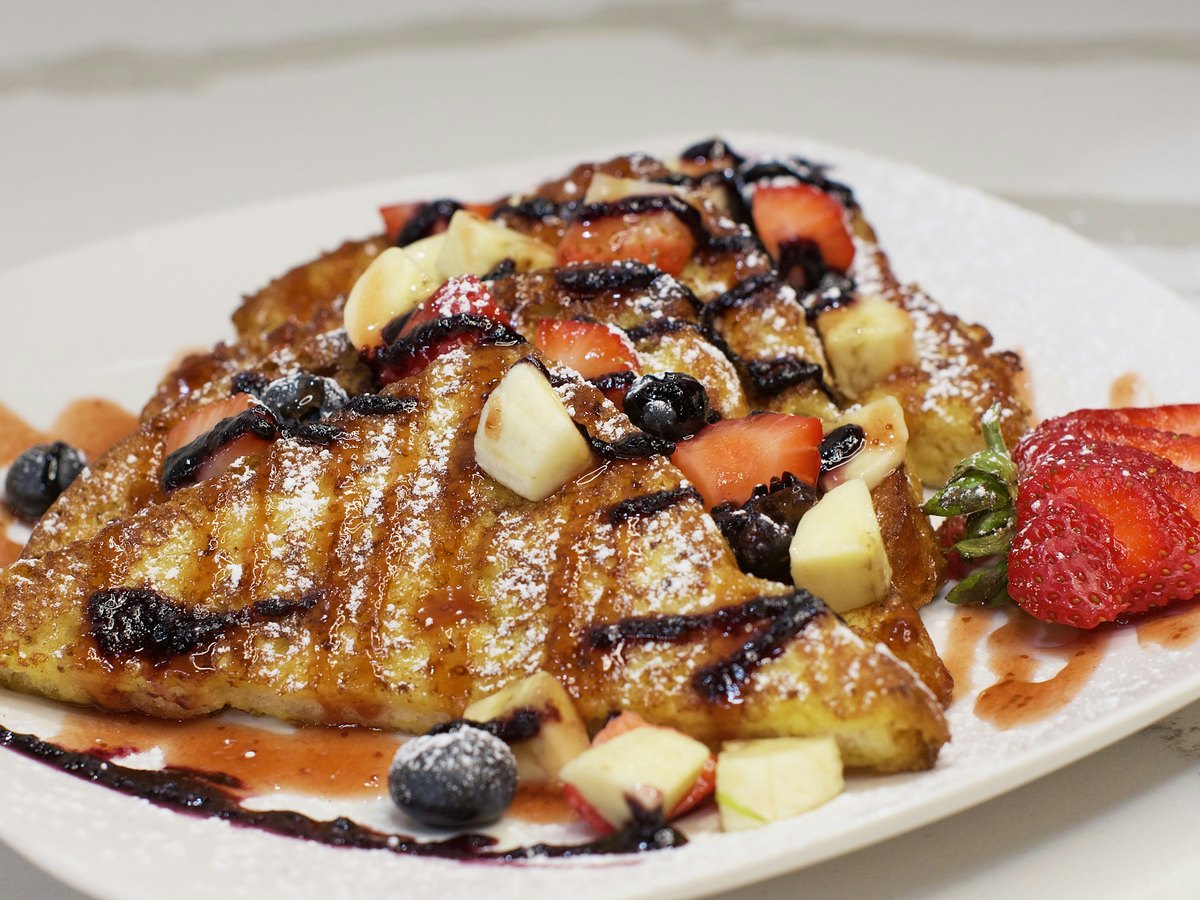
half a loaf has gone hard on the counter and you want a breakfast that reads as an occasion out of bread, eggs and milk
the only bread in the house is a soft fresh loaf and you cannot give it an hour to dry — it comes apart in the custard, and no amount of care in the pan puts it back together
Twenty-five minutes, and almost all of it is standing at the pan. Four slices fit in a big frying pan and two in a normal one, so the last batch goes in while the first is already waiting on a rack in a low oven. Put the custard in a wide shallow dish rather than a bowl — a slice laid flat soaks evenly on both sides, and a slice stood on end soaks one corner. The cook eats last.
What you buy
- 8 slices of stale white bread, cut about 2 cm thick
- 4 eggs
- 300 ml whole milk
- 200 g berries, to serve
- 40 g butter, for the pan
- 2 tbsp caster sugar
- 1 tsp vanilla extract
- 0.5 tsp ground cinnamon
- 0.25 tsp salt
- maple syrup, to serve
Stale bread is a requirement here, not a way of dressing up a problem. Bread is mostly water when it is fresh, and a fresh slice has no room left to take on any more of it — the custard sits on the surface, the crumb collapses under its own weight, and what comes out of the pan is a wet grey pad with a fried skin on it. Stale bread has lost that water and left the structure behind: the crumb is dry, firm and open, so it draws the custard in and still holds its shape while it does. Two or three days old is right. If all you have is fresh, cut it thick and dry the slices on a rack or in a low oven first, and be honest that you are rebuilding a condition rather than skipping one.
What you do
- If the bread is not already stale, cut it thick and leave the slices spread out on a rack for an hour, or dry them in a 150°C oven for ten minutes and let them cool. They should feel dry and firm at the edges rather than toasted. Do not go on to the custard with a soft fresh loaf; the rest of this is written for bread that has dried out.
- Whisk the eggs in a wide shallow dish until the whites and yolks are one colour and there is not a ribbon of white left. It takes longer than it sounds, and it is the step that decides whether the finished slice tastes of custard or of omelette.
- Whisk in the milk, sugar, vanilla, cinnamon and salt. Keep going until the sugar has gone and the cinnamon is suspended rather than floating in a raft on the surface — cinnamon does not dissolve, so stir it again between batches.
- Lay two slices flat in the custard and leave them about twenty seconds a side. Thicker or drier bread wants forty. Press one gently in the middle: it should feel heavy and yielding all the way through and not squash flat. Lift it out and let it drip for a second or two.
- Heat a heavy frying pan over a medium heat for two or three minutes before anything goes in it, then add a knob of the butter and let it foam and settle. It should sizzle when the bread lands, not crackle or smoke.
- Cook the slices for three to four minutes on the first side without moving them. Lift a corner to look: you want an even mid-brown with darker freckles, and the surface should have gone from wet to dry.
- Turn once and give the second side another two to three minutes. Press the middle with a spatula — it should feel springy and set rather than soft and heavy, which is the only reliable sign that the custard inside has cooked.
- Move them to a rack in a low oven, wipe the pan out with kitchen paper, add fresh butter and do the next two. Serve with the berries, the syrup and more butter.
Three things that decide it
- The bread has to be stale, and it has to be thick. Fresh bread is largely water, and a slice that is already saturated cannot take up custard — the liquid stays on the outside, the crumb loses what little structure it had, and the slice tears as you lift it and fries into a wet grey pad. Two or three days of air changes that: the water has gone, the starch has firmed, and the crumb is now a dry open structure that pulls the custard in and holds its own shape while it does. Thickness does the second half of the job. A thin slice has nowhere for a soft custardy middle to live, so it is crisp on both faces and nothing in between, which is toast with an egg on it. Cut it at about 2 cm and both textures fit.
- The custard is four eggs to 300 ml of milk, and that ratio is what decides the flavour. Too much egg and the coating sets firm and savoury and tastes of omelette; too much milk and there is not enough protein to set at all, so the middle stays wet however long you cook it. Whisking matters as much as the ratio: unbroken threads of egg white cook into pale rubbery streaks you can see and taste on the finished slice, so beat the eggs alone until they are one colour before the milk goes in. The soak is short on purpose. Twenty seconds a side is enough for bread that is genuinely stale, because dry crumb takes liquid quickly, and a slice left face-down in the dish for two minutes is heavier than the pan can cook through.
- The pan is medium and it stays medium, and the fat is butter. A soaked slice is thick, cold and full of raw egg, and it has to reach a set custard in the middle before its outside goes past brown — which only happens over a fairly narrow band of heat. Too hot and the sugar and the milk brown in ninety seconds over a raw seam, and the outside is dark long before you can do anything about it. Too cool and the slice sits there giving its custard up into the pan, and comes out pale, greasy and flat. Butter is what browns it properly and it is also what burns, so wipe the pan out between batches: it is the last batch's burnt butter that darkens this one, and it is why the third slice is usually worse than the first.
If you have not got it
- Stale white bread
- Brioche or challah, which are enriched and give a noticeably richer, softer result — the version most restaurants serve. They are sweeter too, so drop the sugar in the custard to one tablespoon. Sourdough works and is the better choice if you want the contrast, but cut it thick and expect a chewier slice with a sharper edge. A dense wholemeal or a seeded loaf is the one to avoid: it is too closed to take up custard evenly and comes out patchy.
- Whole milk
- Half milk and half single cream, which is richer and browns a little faster. Semi-skimmed works and is thinner. Oat milk is the best of the plant milks here because it has body and browns well; almond milk is thin enough that you should use one fewer egg, or accept a looser middle. Do not use double cream on its own — there is not enough water in it for the bread to take up, and it fries rather than sets.
- Caster sugar
- Soft light brown sugar, same amount, which browns a shade faster and tastes faintly of caramel. You can leave the sugar out altogether if you are going to drown the finished slice in syrup anyway, but the surface comes out paler and takes longer to colour, because the sugar is doing most of the browning.
- Cinnamon
- The zest of an orange, which is the classic French pairing and cuts the richness better than cinnamon does; or a good grating of nutmeg; or a quarter teaspoon of ground cardamom. Leave the spice out entirely and it is still a proper dish — pain perdu is often nothing but eggs, milk, sugar and bread.
Ahead, and afterwards
The custard keeps, and that is the useful difference from a pancake batter: there is no raising agent in it to spend overnight, so the eggs, milk, sugar, vanilla, cinnamon and salt can be whisked the night before and covered in the fridge. Whisk it again in the morning, because the cinnamon settles. The bread wants doing the night before too — cut the slices and leave them out on a rack, and by morning they are exactly as stale as this needs. Cooked, French toast keeps two days in the fridge and freezes for a month. Cool the slices flat on a rack first so the steam can leave, then freeze them in a bag with baking paper between each one. Reheat from frozen in a toaster on a low setting, or six minutes in a 180°C oven. A microwave heats it through and leaves it limp, which is a worse result than eating it cold.
If it went wrong
- Soggy in the middle
- Either the bread was too fresh or it soaked too long, and the two look identical on the plate. Stale bread needs about twenty seconds a side and no more. The third cause is heat: a pan that is too hot browns the outside in ninety seconds and takes the slice off the heat long before the middle has set, so if the outside looks right and the inside does not, turn the heat down and give it longer.
- It tastes eggy, like an omelette
- Too much egg for the milk, or the eggs were not beaten enough before the milk went in. Whisk the eggs on their own until there is not a thread of white left, then add the milk — unbroken white is what cooks into the pale rubbery streaks you can taste. If it is still eggy after that, add another 50 ml of milk to the custard next time. A little more sugar and vanilla also pushes the flavour back towards custard.
- Dark, almost burnt outside
- The butter was past foaming when the bread went in, or it was left in the pan from the batch before. Wipe the pan out with kitchen paper between batches and add fresh butter each time. If it is browning in under two minutes a side the pan is too hot as well: take it off the heat for thirty seconds, turn the dial down a notch, and start the next two.
Three ways to change it
Soak all the slices, lay them in a single layer on a buttered baking tray, dot them with butter and bake at 200°C for about twenty minutes, turning once halfway. It is a slightly drier and more even result than the pan, with less colour and no burnt-butter risk, and it is the only version where everybody sits down at the same time. Worth it from about six slices upward; below that the pan is better.
Leave out the sugar, the vanilla and the cinnamon, and add plenty of black pepper and another quarter teaspoon of salt. Cook it the same way and serve it with a fried egg on top, or with bacon, or with grated cheese melted onto the second side while it is still in the pan. This is the version that turns a hard loaf into a dinner, and it is far less sweet than the name leads people to expect.
Brioche cut at 2 cm, one tablespoon of sugar instead of two, and the zest of a whole orange in the custard. Cook it a shade cooler, because enriched bread browns faster, and serve it with the juice of that orange boiled down for a couple of minutes with a spoonful of sugar. Richer, softer, and a good deal closer to what a restaurant hands you.
Questions people ask
What if my bread is fresh?
Dry it out first. Cut it about 2 cm thick, spread the slices on a rack and leave them for an hour, or put them in a 150°C oven for ten minutes and let them cool completely before they meet the custard. You are not toasting them — they should still be pale, just dry and firm at the edges. Fresh soft bread is the single most common reason this dish fails, because a slice that is already full of water cannot take up custard and collapses instead.
Can I make it without dairy?
Yes, and oat milk is the one to reach for: it has enough body to make a custard that sets, and it browns well. Almond and rice milk are thinner, so use one fewer egg or accept a looser middle. Cook the slices in oil, or in a plant butter if you have one — oil browns them less, so give them an extra minute a side rather than turning the heat up.
How is this different from eggy bread or pain perdu?
They are the same dish under three names, and the sweetness is the only real variable. Pain perdu is the French name and it means lost bread — the point of it, as here, is a loaf that would otherwise be thrown out. Eggy bread is what the savoury version is usually called in Britain: no sugar, no vanilla, often nothing but egg and salt, eaten with ketchup or with bacon. French toast is the sweet one, with sugar and usually a spice in the custard and syrup on top.
Cooking it for a different number
Written for 4. For two, halve the 8 slices of stale white bread and leave the seasonings as they are — they scale badly by arithmetic and well by taste. For six or more, add half again rather than double, and use two trays or two pans instead of crowding one.
Or change the number once and let the shopping list follow. That is the one bit of this a person should never do by hand.
Read next

Greek Yogurt Bowls with Crisp Potatoes
Potatoes crushed flat and fried until the edges shatter, over cold salted yogurt. 10 min
Overnight Oats with Yogurt and Berries
Four jars on Sunday, and breakfast on Wednesday is a decision you already made. 45 min