Grilled Cheese, and the Heat Stays Low
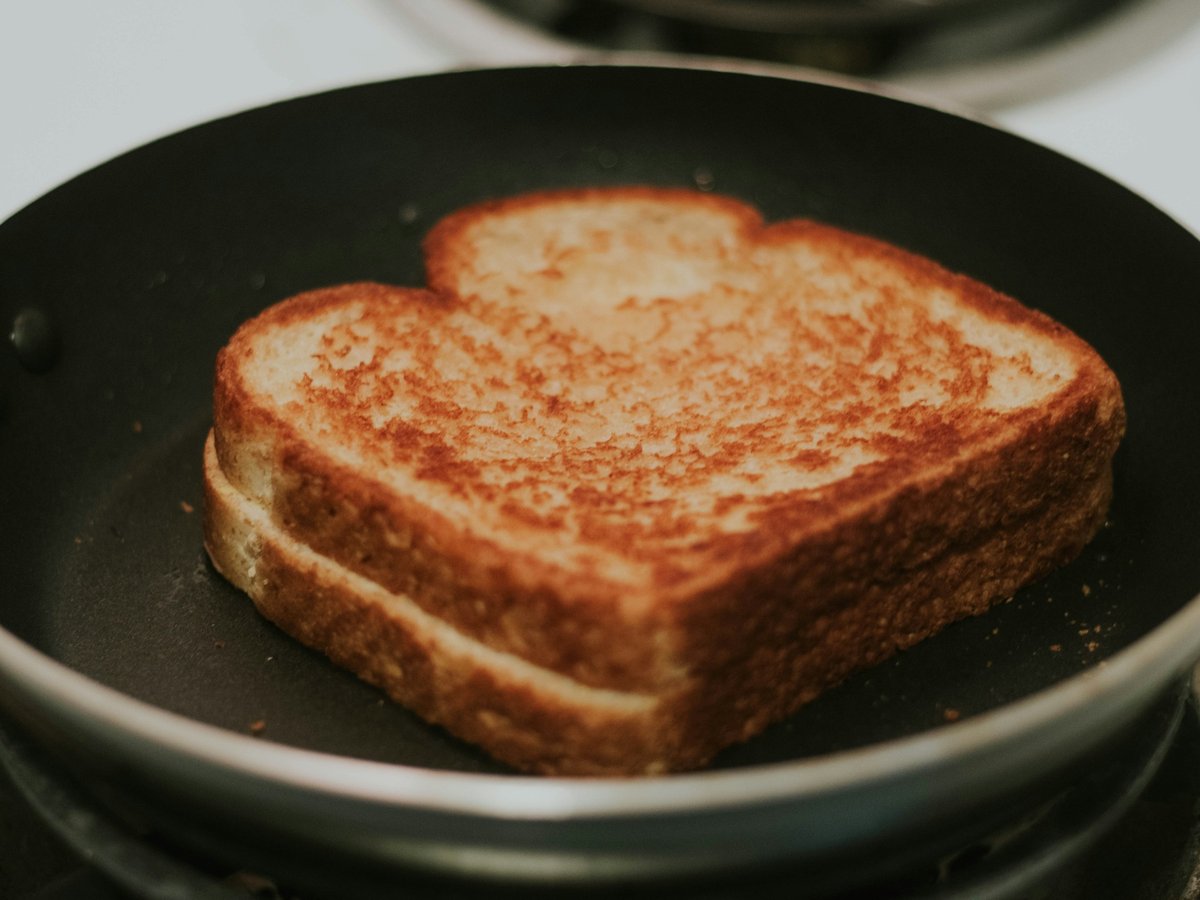
Bread gone gold and crisp outside, cheese melted all the way through — the whole trick is a pan cool enough to let the second thing happen before the first one burns.
- 5 minprep
- 4servings
you want something properly satisfying in under twenty minutes and you are willing to let the pan do it slowly
you are in a genuine hurry — the whole method here is the extra few minutes on a gentler heat, and rushing it is what burns the outside before the middle melts
Most grilled cheese goes wrong at the stove, not the shopping list: the pan is too hot, so the crust is the colour of a conker while the middle is still a cold slab of cheddar. Turn the heat down further than feels right and give it the time that buys — six or seven minutes a side rather than three — and the bread and the cheese finish together. A lid for the last minute does the rest, trapping enough heat to melt the middle without browning the crust any further.
What you buy
- 8 thick slices white sandwich bread
- 300 g mature cheddar, coarsely grated
- 60 g butter, softened
- 1 tbsp Dijon mustard
Grate the cheese rather than slicing it — it packs edge to edge and melts in half the time, with no cold seam down the middle.
What you do
- Grate the cheddar rather than slicing it, and let the butter come fully soft at room temperature — both need to spread easily in a moment.
- Spread four slices of bread with the mustard and divide the cheese between them, right out to the edges. Top with the remaining four slices.
- Butter the outside of all eight slices, again right to the corners. Put a large non-stick pan over medium-low heat — not medium — and lay in as many sandwiches as fit without touching.
- Cook six to seven minutes on the first side, pressing down gently once with a fish slice halfway through, until it is deep gold. Resist turning the heat up: this is the slow half of the method.
- Flip, and put a lid on the pan for the last minute of the second side. The steam trapped under it finishes melting the middle while the crust takes on no more colour. Six to seven minutes more.
- Move to a board, let it sit thirty seconds, then cut on the diagonal. The cheese needs that half-minute to stop running and start holding.
Three things that decide it
- Medium-low heat, and more time than feels right. On a hot pan the crust is already dark mahogany while the middle of the cheese is still cool and unmelted — the two things this sandwich needs to finish together happen at very different speeds, and only a gentler, longer cook lets them meet. Six or seven minutes a side, not three.
- The cheese is grated, not sliced. A slice leaves gaps at the corners and takes longer to melt through its own thickness; grated cheese packs edge to edge and gives up its structure the moment it is warm, so every bite gets melted cheese rather than a cold seam down the middle.
- Butter goes right to the crust's edge, corners included. The commonest pale, dry bite on a grilled cheese is the corner nobody buttered — butter conducts the pan's heat into the bread, and without it that corner just sits there drying out while the rest browns.
If you have not got it
- Butter
- Mayonnaise, spread the same way, edge to edge. It has a higher smoke point than butter, so it browns more evenly before it burns, and it spreads cold straight from the fridge, which butter will not.
- White sandwich bread
- Sourdough, cut a little thicker. It holds its structure under the weight of all that cheese where a soft sandwich loaf can go limp, though it wants a minute longer on each side to match.
- Mature cheddar
- A mix of cheddar and something that melts looser, such as Gruyère or Monterey Jack, for a sandwich that pulls into longer strings. Cheddar alone gives the stronger flavour; the blend gives the better cheese-pull.
- Dijon mustard
- Leave it out entirely for the plainest version, or swap in a thin layer of chutney for a sweeter sandwich. Mustard's only job here is to cut the richness, and both of those do it differently.
Ahead, and afterwards
Grilled cheese does not wait well. Have the pan at medium-low and ready before you start buttering, because bread left assembled on the counter goes soggy within minutes. It reheats passably in a dry pan for two minutes a side, enough to recrisp the crust, but a microwave turns the bread chewy before the cheese is properly hot again. It does not freeze: thawed bread turns gummy and the cheese separates into grease and solids instead of staying melted.
If it went wrong
- The outside burned before the middle melted
- The pan was too hot. Turn it down a full notch below what feels right and give it twice as long — the point of going low and slow is that the crust and the cheese finish together instead of racing each other.
- The cheese never fully melted
- Either it was sliced rather than grated, which melts much more slowly and unevenly, or the lid never went on. Covering the pan for the last minute traps enough heat to finish the middle without any more colour on the crust.
- The corners were pale and dry
- Butter missed them. Spread it right to every edge of the bread, including the corners — any bit left dry just sits there losing moisture instead of browning.
Three ways to change it
A couple of thin tomato slices and a basil leaf inside with the cheese, added once the first side is turned so they do not steam the bread soft before it has crisped.
A slice of ham and an extra teaspoon of Dijon turns this into a croque-monsieur in miniature. Add the ham after the first flip so it warms through rather than drying out.
Equal parts cheddar, Gruyère and Monterey Jack instead of cheddar alone — stronger, stringier, and it needs no extra time.
Questions people ask
Why does my grilled cheese always burn before the inside melts?
Almost always the heat. A grilled cheese wants medium-low, not medium — hot enough to brown the crust over six or seven minutes, not three, which is the only way the cheese at the centre gets time to catch up.
Should I use butter or mayonnaise?
Either works; they brown differently. Butter tastes better and burns sooner, mayonnaise browns more evenly and spreads easily even cold. Either way, go right to the edges of the bread, corners included.
What is the best cheese for a grilled cheese sandwich?
Mature cheddar, grated rather than sliced, is the reliable choice: strong flavour and a clean melt. A softer cheese like Monterey Jack or Gruyère melts looser and pulls into longer strings, if that matters more to you than the sharper taste.
Cooking it for a different number
Written for 4. For two, halve the 8 thick slices white sandwich bread and leave the seasonings as they are — they scale badly by arithmetic and well by taste. For six or more, add half again rather than double, and use two trays or two pans instead of crowding one.
Or change the number once and let the shopping list follow. That is the one bit of this a person should never do by hand.
Read next
Chicken and Roasted Pepper Sandwiches
Cold roast chicken, paprika yogurt, and a roll toasted harder than feels sensible. 15 min
Greek Salad, and Bread for the Juice
No lettuce and nothing switched on. Tomatoes, a slab of feta, and bread for what they leave in the plate. 25 min