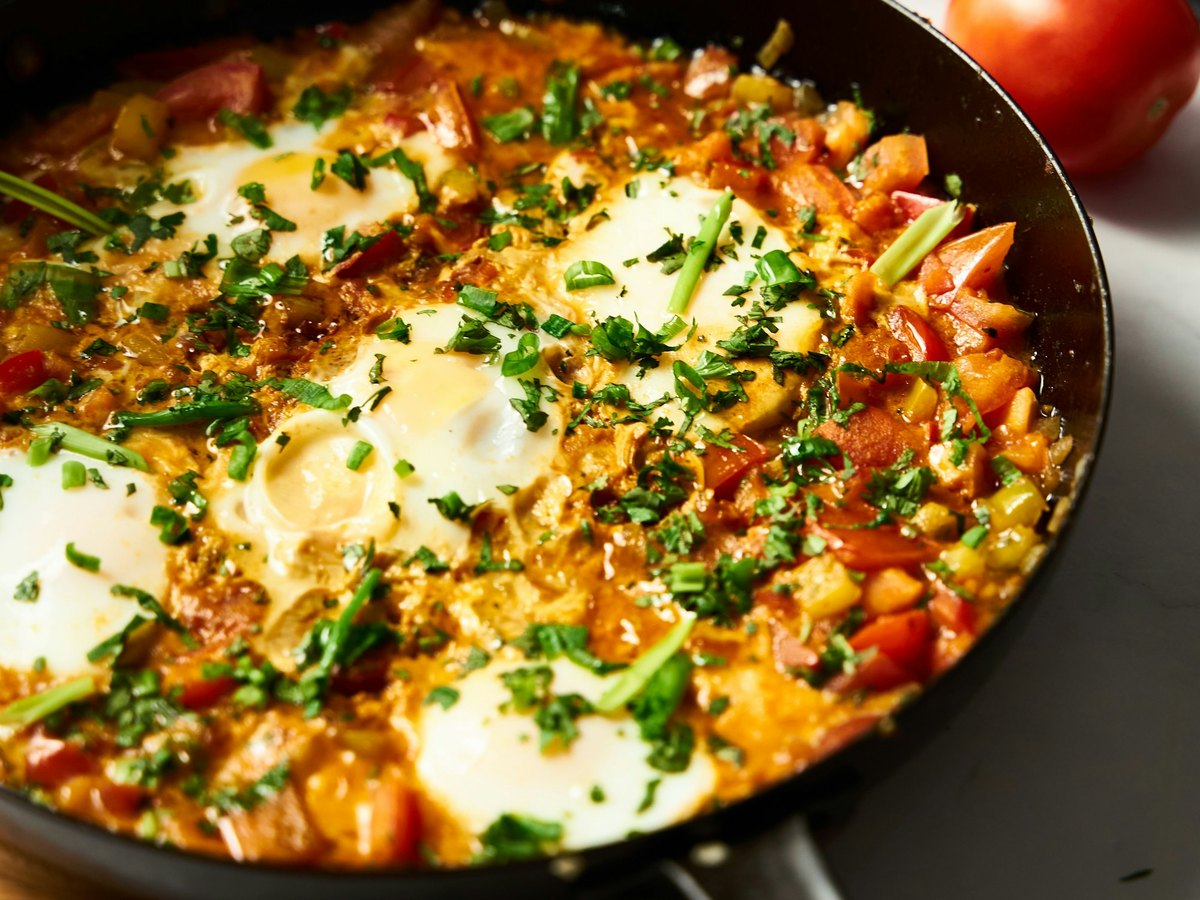
Shakshuka with Peppers and Soft Eggs
One pan of tomato and pepper sauce, eight eggs cracked into it, and bread to get it out.
- 10 minprep
- 4servings
you want one pan in the middle of the table and everyone reaching into it, and you have three quarters of an hour — or you made the sauce at the weekend, in which case you have five minutes
four people need to eat at four different times. The eggs are right for about ten minutes, and reheating them is what turns a soft yolk into a hard one
The sauce is the dish and the eggs are the last five minutes. Peppers and onion want longer than feels reasonable — a quarter of an hour, until they collapse rather than colour — and the tomatoes want ten more after that, until the oil comes back out at the edges. Then the wells, then the eggs, then the lid. Everything before the eggs can happen the day before, which is what turns this from a Sunday dish into a weekday one.
What you buy
- 8 eggs
- 2 cans chopped tomatoes
- 2 red bell peppers
- 1 yellow onion
- 2 cloves garlic
- 0.5 bunch cilantro
- 1 crusty loaf
- 2 tsp ground cumin
- 1 tsp smoked paprika
- 2 tbsp olive oil
- 1 tsp salt
Eight eggs want a wide pan — twenty-eight centimetres across or more. In anything smaller the whites run into each other and you end up serving it with a spatula instead of a spoon.
What you do
- Slice the peppers and the onion thin. Warm the oil in a wide pan over medium heat and cook them with a pinch of the salt for fifteen minutes, stirring now and then, until they have gone soft and sweet rather than browned.
- Add the garlic, the cumin and the paprika and stir for a minute, until you can smell them. Spices bloomed in the oil rather than stirred into the tomatoes is the whole difference between this and eggs in pasta sauce.
- Tip in the tomatoes and the rest of the salt. Simmer uncovered for ten to twelve minutes, until a spoon dragged across the bottom leaves a track that closes slowly and the oil has come back out at the edges.
- Make eight wells with the back of the spoon, right down to the pan, and crack an egg into each. Cover, drop the heat low, and leave it four to five minutes — the whites set from the bottom upwards, so judge it by the tops.
- Off the heat while the yolks still move. Coriander over the whole pan, bread on the side, and let people dig their own eggs out of it.
Three things that decide it
- The sauce has to be thick before the eggs go anywhere near it. A loose one spreads them out into soup and they poach flat and pale; when a spoon leaves a track across the bottom of the pan that closes slowly, it is ready.
- The wells are dug, not hoped for. Push the sauce aside down to the metal with the back of a spoon and crack the egg into the gap. Dropped on top, the white slides across the surface and sets in one sheet over the whole pan.
- The lid cooks the tops, not the heat. Uncovered, the yolks are still cold by the time the whites underneath have gone rubbery. Lid on, heat low, four to five minutes, and it comes off the hob while the yolks still move.
If you have not got it
- Red bell peppers
- Any colour — yellow and orange are sweeter, green is sharper and wants an extra five minutes. A jar of roasted peppers, drained and chopped, skips the first fifteen minutes entirely and is the weekday version.
- Canned tomatoes
- Passata, same amount, and cut the simmer to about six minutes. Fresh tomatoes work in August and not otherwise — out of season they stay watery however long you cook them.
- Cilantro
- Flat parsley, same amount. Either one goes on at the end: cooked into the sauce it tastes of almost nothing.
- Smoked paprika
- Sweet paprika and a pinch of chilli. A heaped teaspoon of harissa stirred in with the tomatoes replaces both it and the cumin.
Ahead, and afterwards
The sauce is the make-ahead and the eggs never are. Cook it through step three, cool it, and it keeps four days covered in the fridge and three months in the freezer — it is better on day two than on day one, once the peppers have given up the rest of their sweetness. Bring it back to a proper bubble before the eggs go in, or they sit in warm sauce and never set. A pan with the eggs already in it keeps a day, but reheating hardens the yolks: eat that one cold, chopped through, on toast.
If it went wrong
- The whites are still clear on top
- The lid is off, or it is not sitting flat. Whites set from the pan upwards, so the top is the last part to go and what it needs is trapped steam, not more heat — more heat only overcooks the bottom. Cover it properly and give it two more minutes.
- Watery sauce under the eggs
- It went in too loose. Once the eggs are in you cannot reduce it without cooking them, so next time simmer until a spoon leaves a track. To rescue it now, lift the eggs onto the bread and boil the sauce hard for two minutes.
- Rubbery whites, cold yolks
- Too hot for too long. The pan should be barely bubbling once the lid is on, and it should come off the heat before the yolks look done — a heavy pan keeps cooking them for a minute after it leaves the hob.
Three ways to change it
Two hundred grams broken over the sauce before the eggs go in. It softens rather than melts and it seasons the whole pan, so use half the salt.
Courgette, spinach and green pepper instead of the tomatoes, loosened with a splash of water and finished with lemon. A different dish that behaves the same way, and it wants the feta.
Brown two sausages in the pan first, lift them out, cook the peppers in what they left behind, and slice them back in with the tomatoes. It stops being breakfast, which is the point.
Questions people ask
What do you serve with shakshuka?
Bread, and not much else. Something with a crust that will not collapse in the sauce — sourdough, a baguette, flatbread warmed in a dry pan. It is eaten out of the pan with everyone reaching in, so the bread is doing the job of a fork.
Can you make shakshuka ahead of time?
The sauce yes, the eggs no. Make the sauce up to four days ahead, or freeze it for three months, then bring it back to a proper simmer and crack the eggs in when you want to eat. That is a five-minute breakfast on a Tuesday.
Why are my shakshuka eggs overcooked?
Usually the pan rather than the timing. Cast iron and heavy steel hold enough heat to carry on cooking for a minute or two after the hob is off, so the eggs should look slightly underdone when the pan comes away. Slide them onto plates if you are not eating straight away.
Cooking it for a different number
Written for 4. For two, halve the 8 eggs and leave the seasonings as they are — they scale badly by arithmetic and well by taste. For six or more, add half again rather than double, and use two trays or two pans instead of crowding one.
Or change the number once and let the shopping list follow. That is the one bit of this a person should never do by hand.
Read next
Greek Yogurt Bowls with Crisp Potatoes
Potatoes crushed flat and fried until the edges shatter, over cold salted yogurt. 10 min
Overnight Oats with Yogurt and Berries
Four jars on Sunday, and breakfast on Wednesday is a decision you already made. 30 min