Banana Bread, and the Bananas Must Be Black
The one recipe that wants fruit nobody else would eat. Four black bananas, one bowl, melted butter, and no mixer anywhere.
- 15 minprep
- 10servings
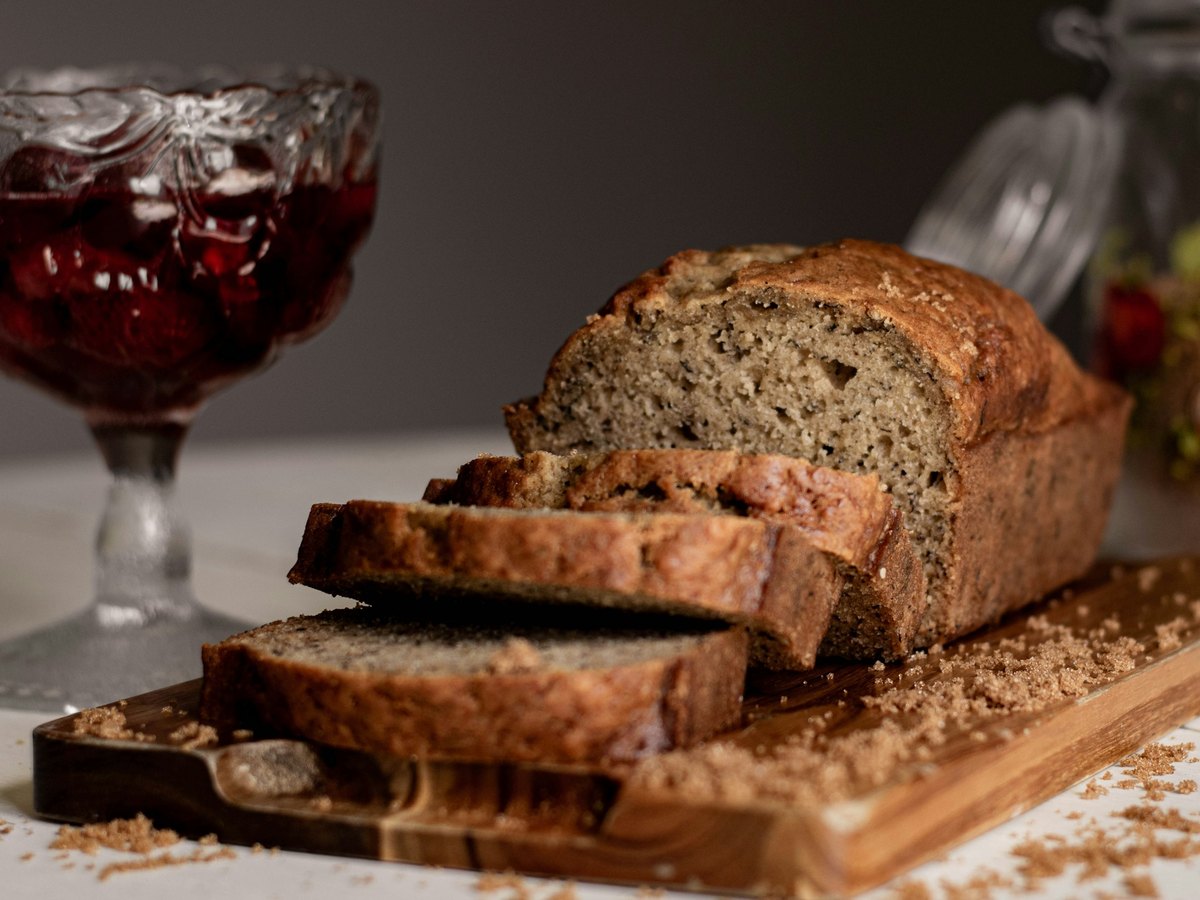
there are four black bananas on the counter and you want one bowl and an hour of oven doing the work
the bananas are still yellow — this is a recipe for fruit that has gone too far, and firm ones make a pale, plain cake
This is the only thing in the kitchen that gets better the longer you ignore the fruit bowl. Four bananas gone black, a bowl, a fork, and melted butter instead of the creaming most cake recipes open with — which means no mixer and nothing to wash but the bowl. The work is about eight minutes. The rest is an hour of oven and, harder than it sounds, an hour of not cutting into it.
What you buy
- 4 very ripe bananas, skins black (about 400 g peeled)
- 115 g butter, melted and left to cool a little
- 2 eggs
- 75 g walnuts, roughly broken (optional)
- 150 g soft light brown sugar
- 220 g plain flour
- 1 tsp bicarbonate of soda
- 1 tsp ground cinnamon
- 1 tsp vanilla extract
- 0.5 tsp salt
The hour of cooling is part of the recipe, not politeness. A banana loaf cut hot tears into a gummy line down the middle, because the crumb is still setting and the steam has nowhere to go. The same loaf an hour later slices clean.
What you do
- Heat the oven to 170°C fan and line a 900 g loaf tin, letting the paper stand above the long sides so you can lift the loaf straight out later.
- Mash the bananas in a large bowl with a fork. Stop while there are still lumps in it — a completely smooth puree bakes into a wetter, flatter loaf, and those lumps are what melt into pockets of banana.
- Stir in the melted butter and the sugar, then the eggs, the vanilla, the cinnamon and the salt. It will look thin and split at this point. That is right.
- Tip the flour and the bicarbonate of soda in on top and fold about ten times with a spatula, adding the walnuts halfway through. Stop while you can still see streaks of dry flour. The last of it disappears as you scrape the batter into the tin.
- Bake for 55 to 65 minutes. It is done when a skewer pushed into the middle comes out with a crumb or two clinging to it rather than wet batter, and the crack along the top has lost its shine.
- Leave it in the tin ten minutes, then lift it out onto a rack and leave it a full hour before you cut it.
Three things that decide it
- The bananas have to be black, or at least far more brown than yellow. As a banana over-ripens its starch turns to sugar and its flesh gives up water, which is the entire flavour of this loaf and most of its sweetness. A yellow banana is starchy and tastes of very little once baked, and no amount of extra sugar stands in for it.
- Melted butter, not creamed. Creaming beats air into a batter and gives you a light, open cake; banana bread is meant to be dense and damp. Melting also drops the method to one bowl and one fork, and takes the mixer out of a recipe that never needed one.
- Stop mixing while flour still shows. Once flour meets liquid it starts building gluten, and gluten in a cake batter reads as rubbery and tight rather than tender. Ten folds is genuinely enough — undermixing is nearly impossible here and overmixing is the most common way this loaf goes wrong.
If you have not got it
- Butter
- Sunflower or a mild olive oil, same weight. Oil stays liquid at fridge temperature, so an oil loaf is softer on day three than a butter one — a genuine advantage if it is going to sit around.
- Walnuts
- Pecans, dark chocolate chopped into chunks, or nothing at all. The loaf is complete without them; they are texture, not structure.
- Soft light brown sugar
- Caster sugar, same weight. You lose the faint treacle note the brown sugar gives, and the crust browns a little less. Dark brown sugar goes the other way and can bully the banana.
- Plain flour and bicarbonate of soda
- 260 g self-raising flour with a quarter teaspoon of bicarbonate of soda kept in. Do not drop the bicarb entirely: it is there to react with the acid in the bananas, and it browns the crust as much as it lifts the crumb.
Ahead, and afterwards
The loaf is better on day two than on the day it is baked — the crumb settles and the banana comes forward. Wrapped in foil or a bag at room temperature it holds four days; the fridge is worse than the counter here and dries it out. It freezes very well, and the useful way is in slices rather than whole: lay them on a tray until solid, then bag them, and take out one at a time. A frozen slice toasts straight from the freezer and is arguably the best version of it. The batter does not keep — the bicarbonate of soda starts working the moment it meets the bananas, so it goes in the tin and into the oven.
If it went wrong
- It sank into a dip down the middle
- Almost always underbaked rather than a bad recipe. The middle of a deep loaf is the last thing to set and it falls as it cools if it came out early. Take it to 60 minutes and test with a skewer rather than trusting the clock or the colour — the top browns long before the centre is done.
- It came out dry and tight
- Overmixed, or short on banana. Fold ten times and stop, and weigh the fruit if you can: four small bananas can be 250 g rather than 400, which is a quarter of the moisture missing.
- There is a dense, wet line along the bottom
- The batter was not fully combined when it went in, so the heavier banana settled. It comes from folding too gently rather than too little — scrape right to the bottom of the bowl on the last couple of turns, where a pocket of unmixed mash tends to sit.
Three ways to change it
150 g dark chocolate chopped into rough pieces, folded in with the flour. Chop it rather than using chips, which are made to hold their shape and stay as small hard dots instead of melting into seams.
Cook the butter in a small pan until it foams, smells of toffee and the solids at the bottom turn brown, then cool it before it goes in. It adds about five minutes and changes the loaf more than anything else on this page.
Keep a fifth banana back, halve it lengthways and lay the two halves cut side up on the batter before it bakes. They caramelise into the crust and make it obvious from across the room what the loaf is.
Questions people ask
How ripe is ripe enough?
Black skins, and flesh you can mash with a fork with no effort. Brown-spotted and still firm is not there yet. If the skin has split and it smells strongly of banana in the room, it is exactly right — that is the point most people throw them away.
Can I ripen bananas quickly in the oven?
Partly. Twenty minutes at 150°C in their skins until they blacken will soften them and concentrate them, and it is much better than using yellow ones. It is not the same as time, though: oven-ripening drives off water but does not convert as much starch to sugar, so the loaf comes out a little less sweet.
Can I use bananas I froze?
Yes, and they are among the best you can use. Defrost them fully in a bowl and pour in the dark liquid that comes out with them — that is banana, not waste. Freezing ruptures the fruit, which is why they mash to nothing and why the flavour is so forward.
Cooking it for a different number
Written for 10. For two, halve the 4 very ripe bananas and leave the seasonings as they are — they scale badly by arithmetic and well by taste. For six or more, add half again rather than double, and use two trays or two pans instead of crowding one.
Or change the number once and let the shopping list follow. That is the one bit of this a person should never do by hand.
Read next
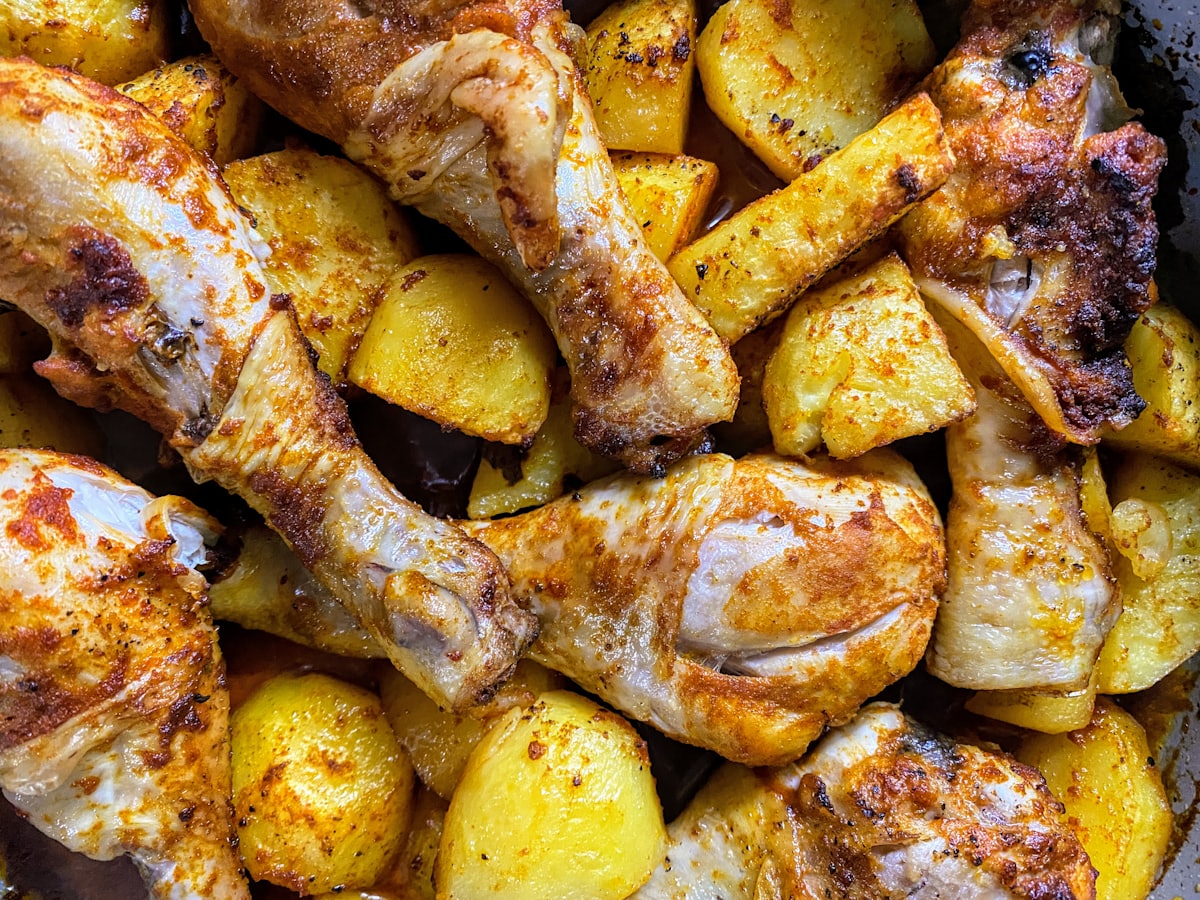
Sheet-Pan Chicken Thighs with Potatoes and Peppers
Skin that crackles, potatoes that catch at the edges, and one tray to wash. 35 min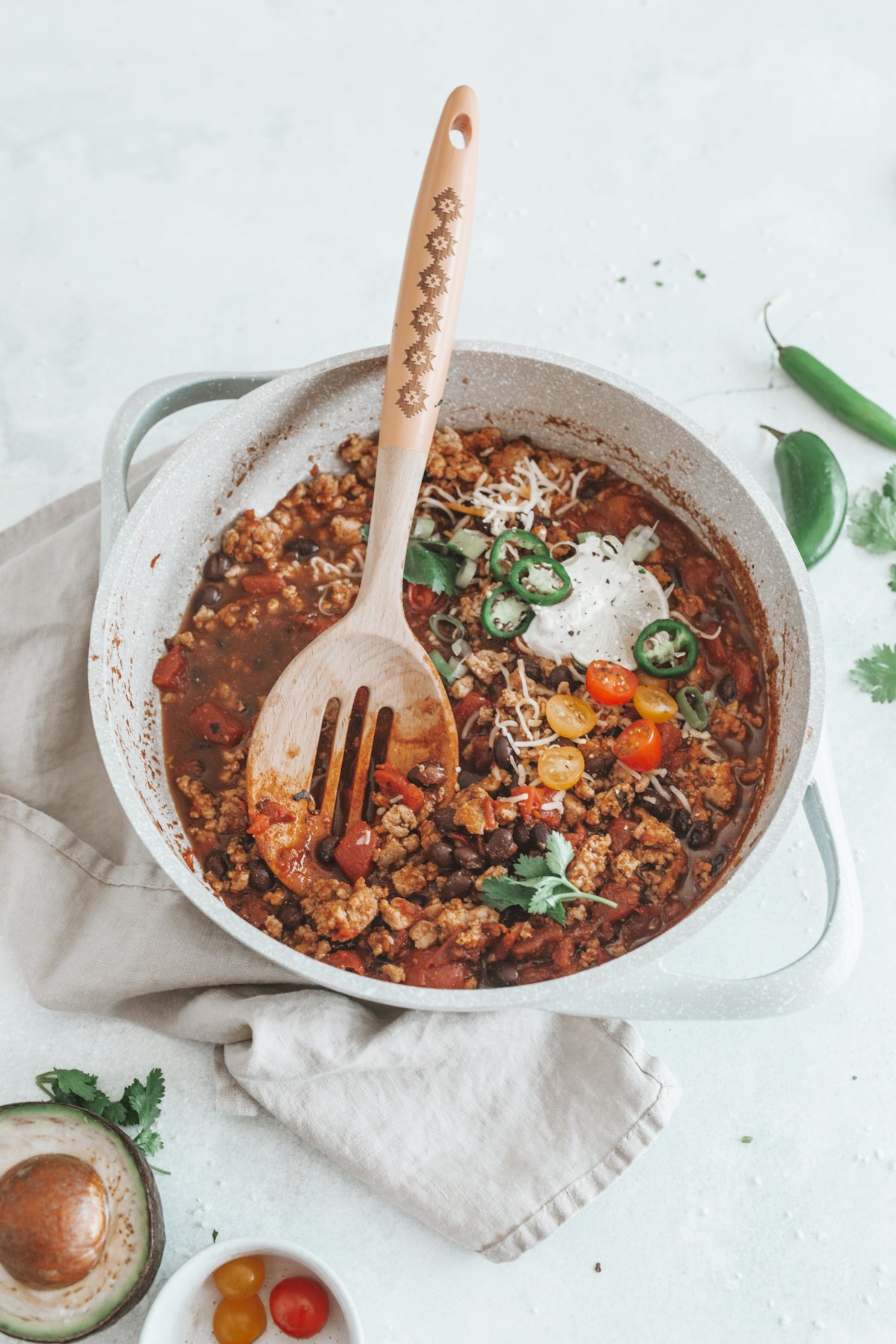
Turkey Chili with Black Beans
Smoky, thick enough to stand a spoon in, and better on the second day. 15 min