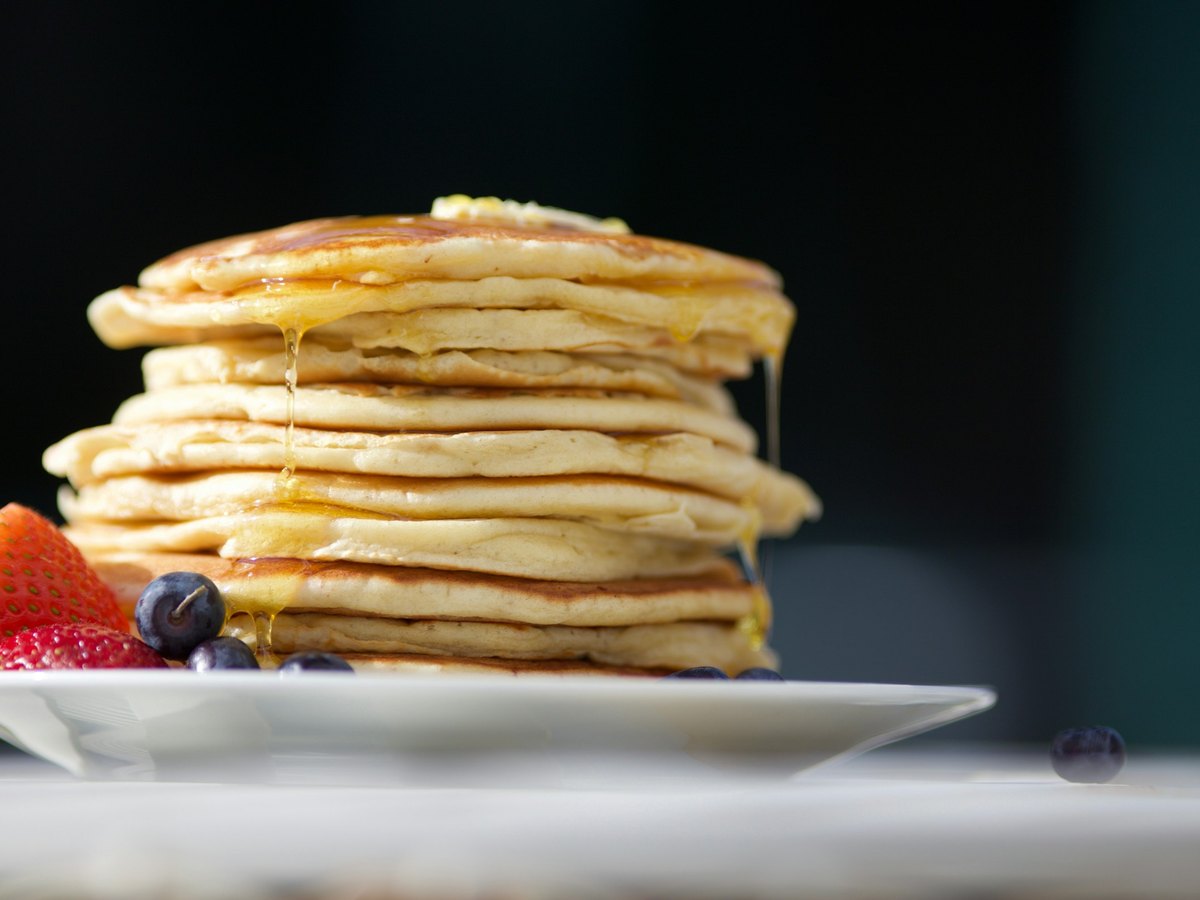
Buttermilk Pancakes, and the Batter Stays Lumpy
The batter is folded about ten times and left visibly lumpy. Beaten smooth it builds gluten, and gluten is what turns a pancake from something that tears under a fork into something that bounces off it.
- 10 minprep
- 4servings
you want something that reads as an occasion out of flour, eggs and a pot of buttermilk, and you can give a pan twenty unbroken minutes
four people need to sit down and eat at the same moment — these come off one or two at a time, and reheated they are a fair bit worse than they were
It takes twenty minutes and fifteen of those are standing at the pan, so have everything measured before you start. Once the buttermilk meets the bicarbonate there is a clock running. They come off one or two at a time, which means the cook eats last and the first one is rarely the best-looking of the batch. Keep them on a rack in a low oven rather than stacking them on a plate, where the steam has nowhere to go.
What you buy
- 480 ml buttermilk
- 2 eggs
- 200 g berries, to serve
- 50 g butter, melted and cooled, and a little more for the pan
- 300 g plain flour
- 2 tsp baking powder
- 1 tsp bicarbonate of soda
- 2 tbsp caster sugar
- 1 tsp vanilla extract
- 0.75 tsp salt
- maple syrup, to serve
Do not beat the batter smooth. It is the instinct everyone has with a lumpy bowl and it is the single thing that ruins more pancakes than heat, ingredients or timing combined. Flour and liquid start building gluten the moment they meet, and stirring is what builds it: the smoother you get the batter, the stronger the network holding it together, and the more that network resists the gas the bicarbonate is producing. A well-beaten batter makes a pancake that is dense, chewy and faintly rubbery — closer to a crumpet than to this. Ten strokes, lumps left in, then ten minutes of standing still. The lumps hydrate and vanish on their own, which is the whole point: rest does what stirring cannot do without cost.
What you do
- Melt the butter first and leave it somewhere to cool while you do everything else. Poured in hot it starts to cook the eggs, and you get threads of scrambled egg through the batter.
- Whisk the flour, baking powder, bicarbonate of soda, sugar and salt together in a large bowl for a good thirty seconds. This is the step that replaced sifting, and it is not optional: a pocket of unmixed bicarbonate tastes of soap, it lands in exactly one pancake, and nothing you do later will fix it.
- In a second bowl beat the buttermilk, eggs, vanilla and the cooled butter until the yolks have disappeared into it.
- Pour the wet into the dry all at once and fold it with a spatula — about ten strokes. Stop while the batter is still lumpy and a few streaks of dry flour are showing. It will look underdone and wrong. It is neither.
- Leave the bowl alone for ten minutes. The flour finishes taking up the liquid and the lumps soften by themselves, and the bicarbonate gets a head start on the acid in the buttermilk. When you come back the surface should be freckled with bubbles.
- Heat a heavy frying pan over a medium heat for three minutes before you cook anything in it — a pan that is still warming is why the first pancake is always the odd one. Wipe it with a little butter on kitchen paper. A drop of batter should sizzle quietly rather than crackle.
- Ladle in about 60 ml per pancake and leave it completely alone for two to three minutes. It is ready to turn when bubbles have risen through the middle and burst, and the edge has gone from wet and glossy to matt and dry.
- Flip once, cook for another minute or two, and press the top lightly with a finger — it should spring back rather than hold the dent. Move them to a rack in a low oven and do the next one. Serve with the berries, the syrup and more butter.
Three things that decide it
- The batter is folded, not beaten, and it goes into the pan lumpy. Stirring flour into liquid develops gluten, and gluten is elastic: it is what you want in bread dough and what you are trying to avoid here. The bicarbonate of soda is producing gas, the pancake is trying to expand, and a strong gluten network holds it down and then springs back — which is exactly what a dense, chewy, faintly rubbery pancake feels like under a fork. Ten strokes with a spatula is enough to wet the flour. The visible lumps are not unmixed batter in any way that matters; they are flour that has not finished absorbing liquid yet, and ten minutes of standing does that better than any amount of work with a whisk.
- Buttermilk and bicarbonate of soda are a reaction with a clock on it, and the clock starts when they meet. Bicarbonate of soda needs an acid to do anything at all, buttermilk is the acid, and what they produce is carbon dioxide — the bubbles you can see on the surface of the rested batter. Most of that gas is made in the first few minutes and it leaves the bowl steadily afterwards, which is why a batter mixed the night before makes flat pancakes: the rise happened at midnight, in the fridge, with nothing to hold it. The ten-minute rest is the window where the flour is hydrating and enough gas is still coming. The baking powder is there as a second, slower lift that waits for the heat of the pan.
- The pan is medium and it stays medium. A pancake is thick, it goes in as liquid, and it has to set all the way through before its outside colours — which only happens in a fairly narrow band of heat. Too hot and you get a dark, almost burnt face over a seam of raw batter in the middle, and the outside is done long before you can fix it. Too cool and it dries out slowly and comes out pale, tough and greasy from sitting in butter. Heat the pan for three full minutes before the first one goes in, then leave the dial alone: the mistake after that is turning it up because the first pancake was pale, which makes every pancake after it worse.
If you have not got it
- Buttermilk
- Plain yogurt let down with milk — 300 g yogurt whisked with 200 ml milk — which is the closest substitute and behaves almost identically, because it brings both the acid and the thickness. Milk soured with a tablespoon of lemon juice or vinegar is the version everyone repeats, and it does work, but be honest about what it is: it is thinner and less acidic, so the pancakes rise less and taste blander. If that is what you have, cut the bicarbonate to half a teaspoon and let the baking powder do more of the work.
- Plain flour
- Self-raising flour, same weight, with the baking powder left out and the bicarbonate kept — the bicarbonate is there for the buttermilk, not for lift alone. Swapping 50 g of the plain flour for wholemeal gives a nuttier, slightly heavier pancake and is worth doing; going much past a third wholemeal makes them dense enough that no amount of resting saves them.
- Caster sugar
- Soft light brown sugar, same amount, which browns a shade faster and tastes faintly of caramel. The sugar is not really there for sweetness — two tablespoons across twelve pancakes is not much — it is there because it browns, and pancakes made without any come out pale and look undercooked whatever you do with the heat.
- Butter in the batter
- The same weight of a neutral oil, which needs no melting or cooling and makes a marginally softer pancake that keeps better the next day. You lose the flavour, which on something this plain is more of a loss than it sounds. Keep the butter for the pan either way — oil in the pan does not brown the surface the same way.
Ahead, and afterwards
The batter itself does not keep, and that is worth knowing before you plan around it: the bicarbonate fires when it meets the buttermilk, so a bowl mixed the night before has already spent its lift by morning and cooks flat. What you can do the night before is measure. Whisk the dry ingredients together in the bowl, cover it, and put the buttermilk, eggs and butter together in a jug in the fridge — then breakfast is one fold and ten minutes. Cooked pancakes keep three days in the fridge and freeze well for three months, which is the better make-ahead route by a distance. Cool them flat on a rack first, stack them with a square of baking paper between each one, and freeze them in a bag. Reheat from frozen in a toaster on a low setting, or four minutes in a 180°C oven. A microwave will warm them through and leave them limp.
If it went wrong
- They came out flat and chewy
- The batter was beaten smooth, almost every time. Fold it about ten times and stop while it is still lumpy. The second cause is a batter that sat too long — over half an hour, or overnight — by which point the gas from the bicarbonate has left the bowl. Ten minutes is the rest; an hour is not a longer rest, it is a spent one.
- Dark outside, raw batter in the middle
- The pan was too hot. Turn it down a notch and give it a minute to settle rather than starting the next pancake straight away, and make them a little smaller while you find the setting — 60 ml of batter cooks through in the time it takes the outside to colour, and a ladleful twice that size does not. If they are browning in under ninety seconds a side, the heat is still too high.
- The first one was perfect and they got worse
- The pan kept getting hotter, which is what a pan on a fixed setting does over twenty minutes. Drop the heat slightly after the first two, and take the pan off the hob for thirty seconds between batches if the butter starts browning the moment it touches the surface. Wiping the pan out with kitchen paper between pancakes also helps, because it is burnt butter from the last one that darkens the next.
Three ways to change it
Ladle the batter, then drop eight or ten blueberries onto each pancake while the top is still wet, and cook as normal. Stirred into the bowl instead they bleed, and the batter goes grey-purple and heavier — and every pancake after the first gets fewer of them, because the fruit sinks. Added on the pan they stay whole, stay put, and each one gets the same number.
Replace 100 g of the plain flour with buckwheat flour. It brings a darker, earthier flavour and, because buckwheat has no gluten of its own, a noticeably more tender pancake — the one case where the beating rule is a little more forgiving. Expect less rise and a browner colour, and do not push it past a third of the flour or they start to crumble at the edges.
Leave out the sugar and the vanilla, and fold 200 g of drained sweetcorn and four sliced spring onions in at the very end. Cook them the same way and serve with a fried egg on top, or with bacon. Much better for using up a pot of buttermilk bought for something else, and it is a dinner rather than a breakfast.
Questions people ask
Can I make the batter the night before?
No, not this one. The bicarbonate of soda reacts with the buttermilk as soon as they are mixed, and most of the gas that makes the pancakes rise is produced within minutes — by the morning it has left the bowl and the pancakes cook flat. Do the preparation instead: whisk the dry ingredients together and cover the bowl, and put the wet ones in a jug in the fridge. That leaves about eleven minutes of work at breakfast, and it is the only part that has to happen then.
What can I use instead of buttermilk?
Plain yogurt thinned with milk is closest — 300 g yogurt to 200 ml milk — because it brings both the acidity the bicarbonate needs and enough thickness to hold the batter up. Milk soured with lemon juice is the common substitute and it does work, but it is thinner and less acidic, so the pancakes rise less. Do not use plain milk with the bicarbonate as written: with no acid it produces very little gas and leaves a soapy taste behind.
How are these different from English or Scotch pancakes?
Three different things sharing a name. English pancakes are thin, eggy and closer to a crêpe, cooked from a batter with no raising agent at all and rolled with lemon and sugar. Scotch pancakes, or drop scones, are small, thick and raised, and much nearer to these — they are the same family, made in a smaller size and usually eaten cold with butter. These are the American kind: thick, raised with bicarbonate against an acid, eaten hot in a stack. A recipe for one is not a recipe for another.
Cooking it for a different number
Written for 4. For two, halve the 480 ml buttermilk and leave the seasonings as they are — they scale badly by arithmetic and well by taste. For six or more, add half again rather than double, and use two trays or two pans instead of crowding one.
Or change the number once and let the shopping list follow. That is the one bit of this a person should never do by hand.
Read next
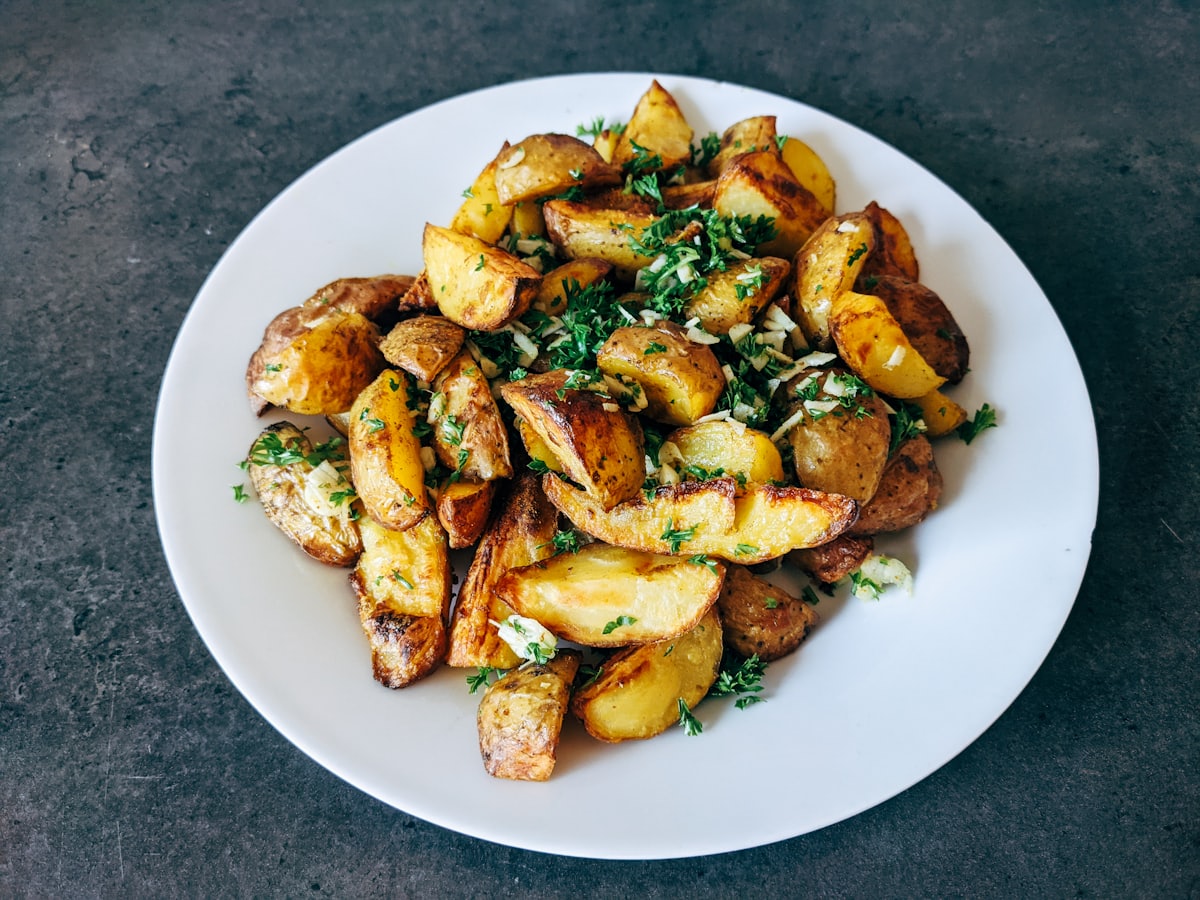
Greek Yogurt Bowls with Crisp Potatoes
Potatoes crushed flat and fried until the edges shatter, over cold salted yogurt. 10 min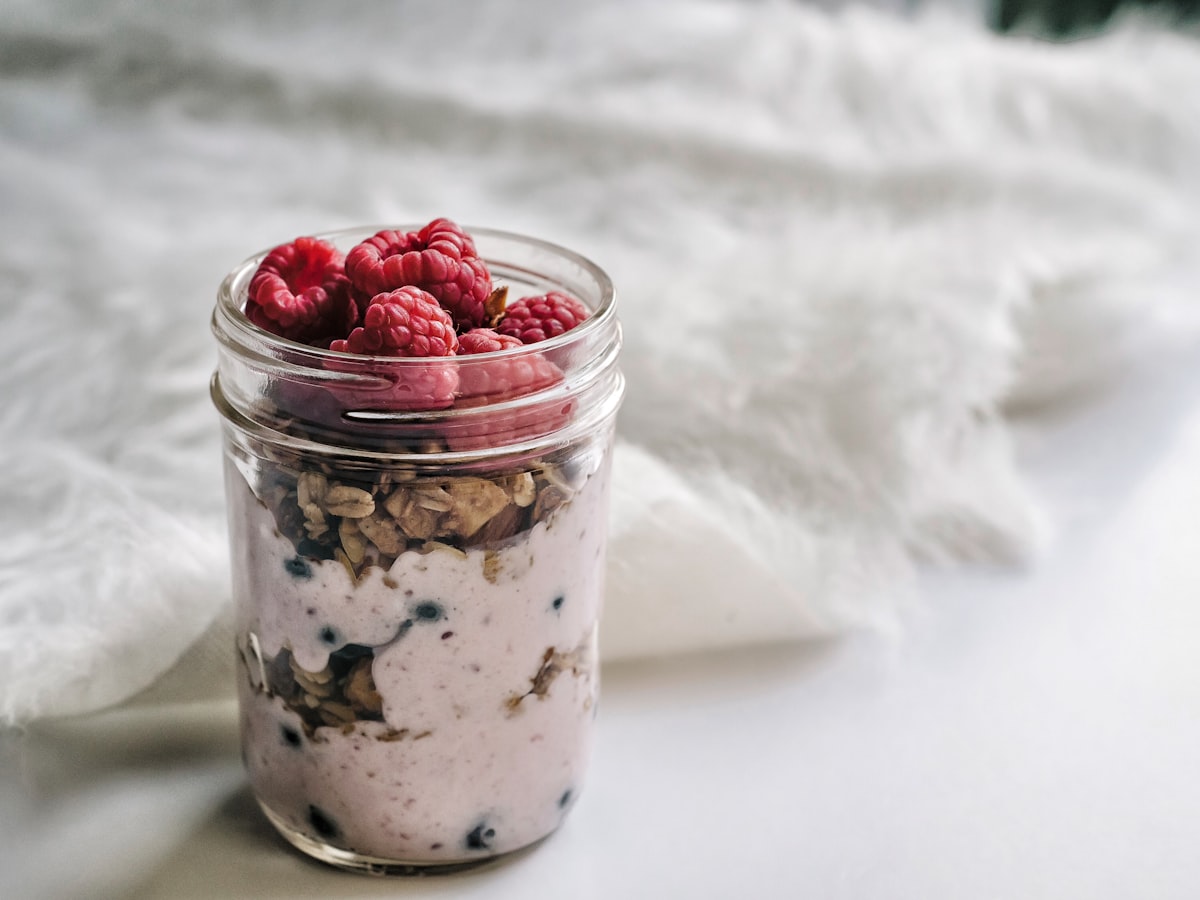
Overnight Oats with Yogurt and Berries
Four jars on Sunday, and breakfast on Wednesday is a decision you already made. 45 min