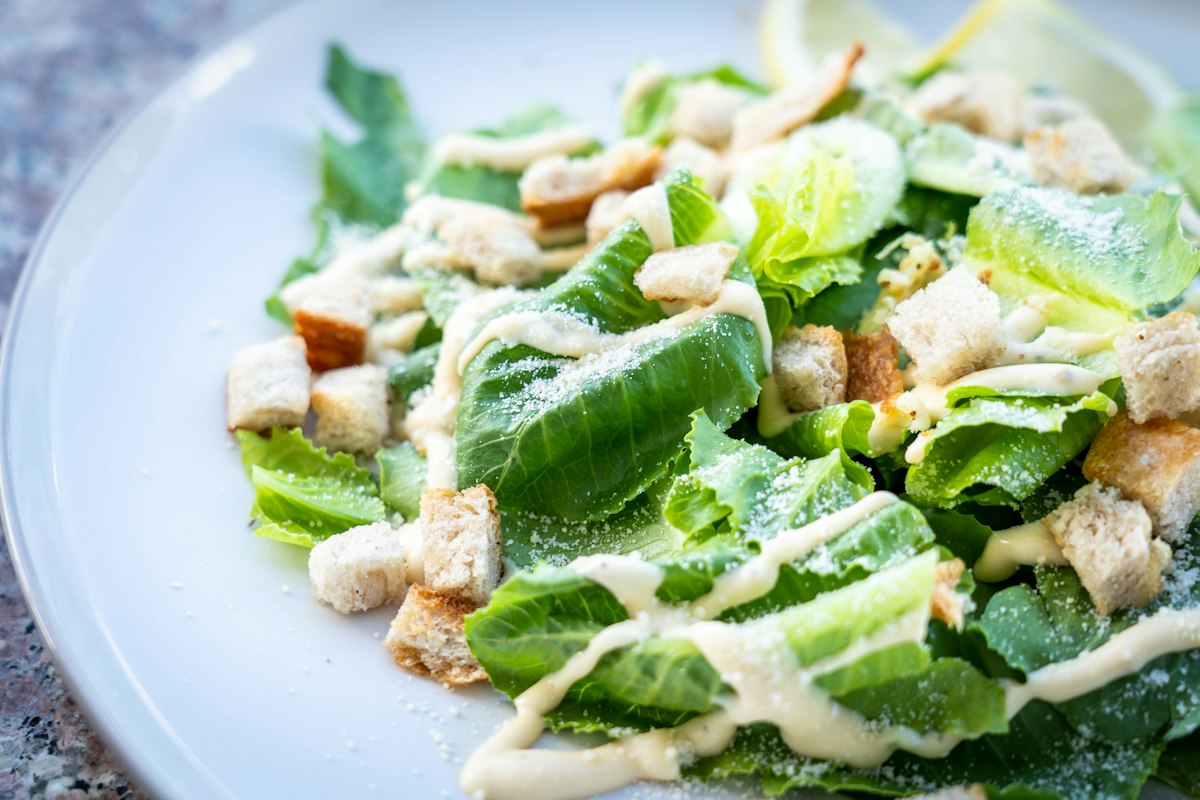
Caesar Salad, and the Egg Gets One Minute in the Water
The dressing is not mayonnaise loosened with a squeeze of lemon. It is built from a barely-cooked egg yolk, whisked with garlic, anchovy and oil until it turns pale and thick — the same emulsion a vinaigrette is, just richer. Skip the coddling and the yolk is either raw or scrambled; there is only one minute where it is neither.
- 15 minprep
- 4servings
lunch needs to be more than leaves, and it has to come together from what is already in the fridge and the cupboard
the only bread you have is soft and fresh — cubed and toasted it still works for croutons, but it browns unevenly and never gets as crisp as bread that has already started to dry out
Fifteen minutes if the bread is already stale, twenty if it needs the oven first. The egg goes into boiling water for exactly sixty seconds while everything else lands on the board — anchovies, garlic, a lemon halved — so there is nothing left to do when the timer goes off. The croutons want their own eight minutes in the oven; do the dressing while they are in there and the whole thing lands at the table at once, tossed in front of whoever is eating it.
What you buy
- 2 romaine lettuce hearts (about 500 g), leaves separated
- 2 thick slices of stale bread, torn into rough chunks
- 1 egg
- 4 anchovy fillets in oil, drained
- 1 tbsp lemon juice
- 40 g parmesan, finely grated, plus extra to serve
- 2 garlic cloves, 1 grated and 1 left whole
- 1 tsp Dijon mustard
- 1 tsp Worcestershire sauce
- 120 ml olive oil
- salt
- black pepper
Coddling is the whole trick, and it earns its own step because a minute either way changes the result. Left fully raw, the yolk whisks into the dressing thin and loose, and it never really leaves the taste of raw egg behind. Boiled for the standard three minutes, the yolk turns chalky and will not emulsify with the oil at all — it breaks the dressing rather than binding it. One minute in boiling water sets a thin skin on the white while the yolk stays warm and just barely thickened, which is exactly the state that takes up oil smoothly and turns into a sauce rather than a broken mixture. It is also the detail that makes this dressing different from a bottled one built on mayonnaise, which is already emulsified before it reaches your kitchen and asks nothing of you at all.
What you do
- Lower the egg gently into a small pan of boiling water and set a timer for exactly one minute, then lift it straight into cold water. This sets the outer edge of the white without cooking the yolk through, which is the whole point of the method — if you are unsure, err on the short side rather than the long one.
- Crack the coddled egg into the bowl the salad will be tossed in, scraping in as much of the white as comes with it. Add the grated garlic, the anchovies mashed to a paste with the flat of a knife, the lemon juice, the mustard and the Worcestershire sauce, and whisk until the anchovy has disappeared into the mixture rather than sitting in strands.
- Add the olive oil in a thin stream while whisking constantly, holding back about 2 tablespoons for the croutons. The dressing should thicken and turn pale as it comes together; if it still looks thin and separated after a minute of whisking, it split because the oil went in too fast — start again with a fresh egg rather than pushing on with it.
- Whisk in half the parmesan and season with salt and pepper. Taste it on a piece of lettuce rather than off the spoon: the leaves cut the intensity of the anchovy and the cheese, and a dressing that tastes right on its own is usually too strong once it is tossed through a full bowl.
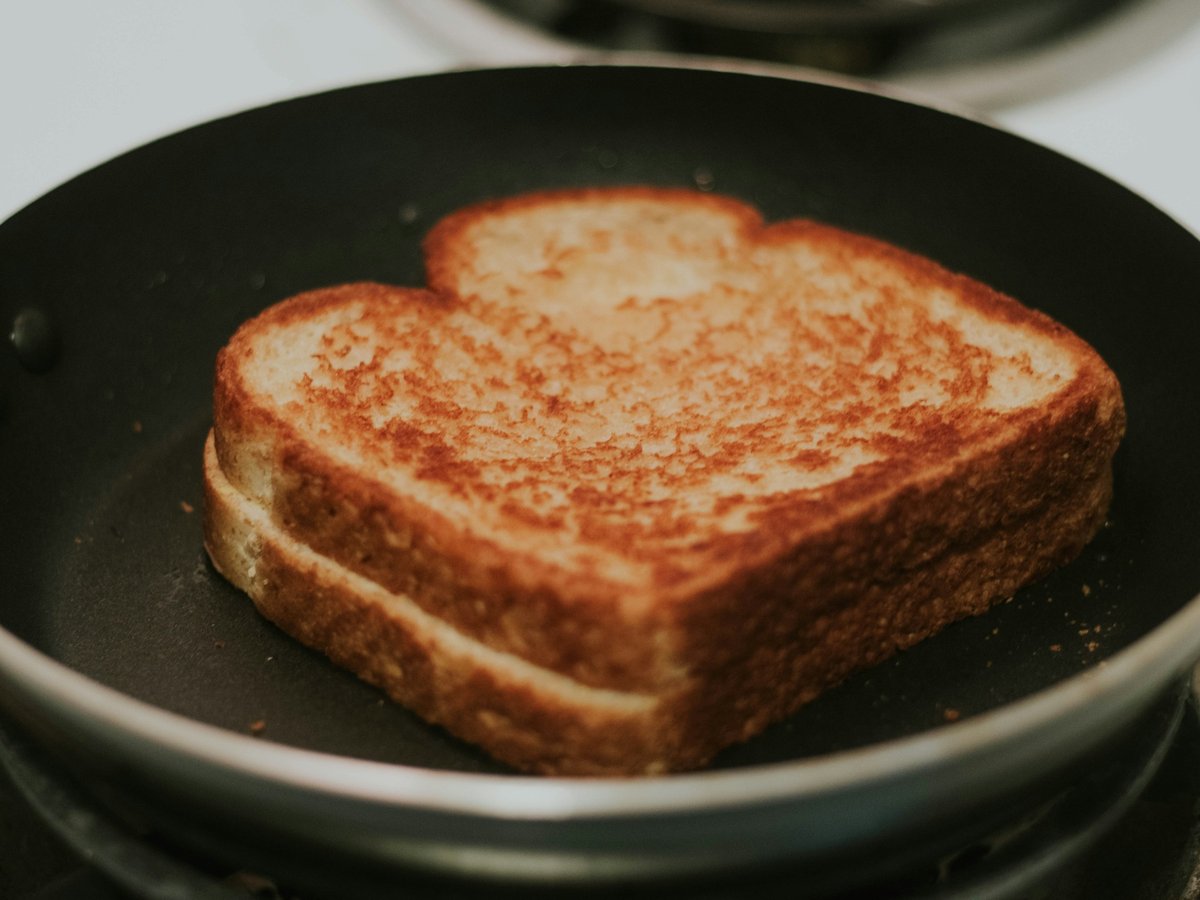
- Toss the torn bread with the reserved whole garlic clove, crushed, and the held-back olive oil. Spread it on a tray and bake at 200°C for eight to ten minutes, turning once, until it is gold right through rather than only at the corners — or fry it in a pan over a medium heat, turning often, for about the same time.
- Dry the romaine completely: a spin in a salad spinner, or a firm shake inside a clean tea towel. Wet leaves are the single most common reason this salad turns watery — the dressing clings to the water instead of to the leaf, and it pools at the bottom of the bowl instead of coating anything.
- Tear or cut the romaine into pieces roughly the size of your palm and add it to the bowl with the dressing. Toss with your hands or two large spoons, working from the bottom, until every leaf is coated and there is no dressing left pooling under the last of it.
- Add the croutons and the rest of the parmesan and toss once more, gently, so the croutons stay crisp rather than turning to paste. Serve straightaway — dressed romaine sits for about ten minutes before it starts to wilt.
Three things that decide it
- The egg is coddled, not raw and not cooked, because the dressing needs a yolk that is warm and just barely thickened to take up oil smoothly. A fully raw yolk whisks in thin and stays thin — it never really binds the anchovy, the garlic and the oil into one sauce, and it tastes faintly of raw egg the whole way through. A yolk boiled past that first minute goes the other way: the proteins have set too far to stretch around the oil at all, so the dressing breaks instead of thickening, however patiently the oil goes in. One minute in boiling water, straight into cold water to stop it, is the narrow window where the yolk is warm enough to loosen and cooperative enough to hold.
- The anchovy goes into the dressing mashed to a paste, never left whole on top as a garnish, because its job here is salt and savouriness rather than a fish flavour you are meant to taste on its own. Mashed and whisked through the oil and lemon, four fillets disappear into a dressing that reads as deep and rounded rather than fishy — the same reason Worcestershire sauce, which is itself built on anchovy, is in there too. Left whole on top, the same four fillets taste sharp and briny and isolated, because nothing has broken them down into the rest of the sauce. The garlic works the same way: grated fine and whisked in, not left in chunks that bite back later.
- The lettuce has to be dry, and it has to be dressed at the last minute, because the dressing is an emulsion of egg and oil and it does not know what to do with water. A wet leaf gives the dressing water to cling to instead of leaf, so it slides off rather than coating anything and collects in a puddle at the bottom of the bowl — the salad that looks drowned but tastes bland, because most of the dressing never touched a leaf at all. Romaine is the lettuce for this for a different reason: its ribs are stiff enough to hold their shape under a heavy, clinging dressing, where a softer lettuce like butterhead collapses and wilts within minutes of being tossed.
If you have not got it
- Coddled egg
- A tablespoon of good mayonnaise, whisked in instead of the egg, if you would rather not use a barely-cooked one at all. It is a shortcut rather than the same dressing — mayonnaise is already emulsified and thickened with vinegar, so the result is heavier and a little more one-note, without the lighter, looser texture the coddled yolk gives. Pasteurised eggs, sold specifically for raw or lightly cooked use, are the other route and let you skip the coddling step entirely.
- Anchovy fillets
- Anchovy paste, about a teaspoon in place of the four fillets, whisked straight in with no mashing needed. To leave anchovy out altogether, add an extra half teaspoon of Worcestershire sauce and a little more salt — the dressing will taste flatter and less savoury, but it will not be missing an ingredient the reader can see.
- Parmesan
- Pecorino Romano, which is saltier and sharper and needs a lighter hand with the salt elsewhere in the dressing, or Grana Padano, which is milder and closer to parmesan than pecorino is. Any of the three should be grated fine rather than shaved, so it disappears into the dressing instead of sitting on top of it in slabs.
- Romaine lettuce
- Little gem, which is smaller, sweeter and just as sturdy — quarter the heads rather than tearing the leaves. Kale works too, but it needs a head start: massage the leaves with a spoonful of the dressing on their own for a minute before the rest goes in, because raw kale is tougher than romaine and softens rather than wilting.
Ahead, and afterwards
The croutons keep for several days in an airtight container at room temperature, so doubling the batch is worth doing — they lose none of their crunch sitting out, only in a sealed bag while still warm. The dressing can be made up to a day ahead and kept covered in the fridge, since it is built on a coddled egg rather than a raw one and behaves like any other cooked-egg sauce; whisk it again before using, as it thickens slightly once cold. The romaine can be washed, torn and dried a day ahead too, wrapped in a dry tea towel inside a bag in the fridge. What does not keep is the assembled salad: dress it within minutes of serving, because romaine sitting in an emulsified dressing wilts within about ten minutes and there is no reviving it afterwards.
If it went wrong
- The dressing looks thin and split, not thick
- The oil went in too fast for the yolk to take it up, or the yolk was too cold from the fridge to loosen properly. There is no rescuing a split dressing by whisking harder — start again with a fresh coddled egg and add the oil in a genuinely thin, steady stream, whisking the whole time rather than in bursts.
- There is a pool of dressing at the bottom of the bowl
- The lettuce was not dry enough. Water on the leaves gives the dressing something other than leaf to cling to, so it runs off instead of coating anything. Spin or towel-dry the romaine properly before it goes anywhere near the bowl, and toss from the bottom so nothing is left unturned.
- It tastes like a plain lettuce salad, not a Caesar
- Either the anchovy and lemon were held back out of caution, or the dressing was added too late and too gently to actually coat the leaves. This dressing is meant to taste strong and salty on its own — sharpen it with a little more lemon, anchovy or salt before it goes anywhere near the bowl, then toss thoroughly rather than drizzling it over the top.
Three ways to change it
Slice grilled or pan-fried chicken thighs and lay them over the tossed salad rather than mixing them through, so the warm chicken does not wilt the leaves underneath it any faster than the dressing already does. Season the chicken with just salt and pepper — the dressing is doing all the flavouring work already.
Shred a bunch of curly or cavolo nero kale, strip the toughest part of the stems, and massage it with a spoonful of the dressing on its own for a minute before adding the rest. Kale is tougher than romaine and needs that head start to soften; skip it and the leaves stay leathery under a dressing that has nothing left to do.
Halve the romaine hearts lengthways, brush the cut sides with oil, and char them cut-side down on a very hot pan or grill for two to three minutes, until the edges blacken in places. They wilt less than raw romaine does under the heat, and the char adds a bitterness the plain leaf never had — spoon the dressing over the halves rather than tossing them.
Questions people ask
Is it safe to use a barely-cooked egg?
A one-minute coddle sets the outer edge of the white but leaves the yolk mostly uncooked, so the usual caution around raw eggs still applies: use the freshest egg you have, and if you are pregnant, elderly, or otherwise advised to avoid under-cooked eggs, use a pasteurised egg instead, or skip the egg and whisk in a tablespoon of mayonnaise in its place.
Can I make the dressing without anchovies?
Yes, though it will taste flatter. Leave them out and add an extra half teaspoon of Worcestershire sauce, which is itself built on anchovy, and a touch more salt to make up the difference. It will not be the same dressing, but it will not be missing anything a reader can point to on the plate.
What makes this different from a bottled Caesar dressing?
Most bottled versions start from mayonnaise, which is already thick and emulsified before the anchovy and parmesan are added, so the result tastes mostly of a creamy, tangy base with Caesar flavouring stirred through it. Building the emulsion from a coddled egg instead gives a lighter, looser dressing where the anchovy, garlic and fresh parmesan are the main flavour rather than an accent on top of mayonnaise.
Cooking it for a different number
Written for 4. For two, halve the 2 romaine lettuce hearts (about 500 g) and leave the seasonings as they are — they scale badly by arithmetic and well by taste. For six or more, add half again rather than double, and use two trays or two pans instead of crowding one.
Or change the number once and let the shopping list follow. That is the one bit of this a person should never do by hand.
Read next
Chicken and Roasted Pepper Sandwiches
Cold roast chicken, paprika yogurt, and a roll toasted harder than feels sensible. 15 min
Greek Salad, and Bread for the Juice
No lettuce and nothing switched on. Tomatoes, a slab of feta, and bread for what they leave in the plate. 18 min