Chicken Fajitas, and the Chicken Is Sliced After
One hot pan, twice. The chicken goes in whole and is sliced when it comes out, which is the difference between fajitas that are juicy and fajitas that are dry.
- 15 minprep
- 4servings
four people should assemble their own dinner and you want twenty minutes of actual cooking
the pan cannot get properly hot — on a weak hob or a small induction ring this turns into a stew of pale peppers, and a tray in a hot oven is the better plan
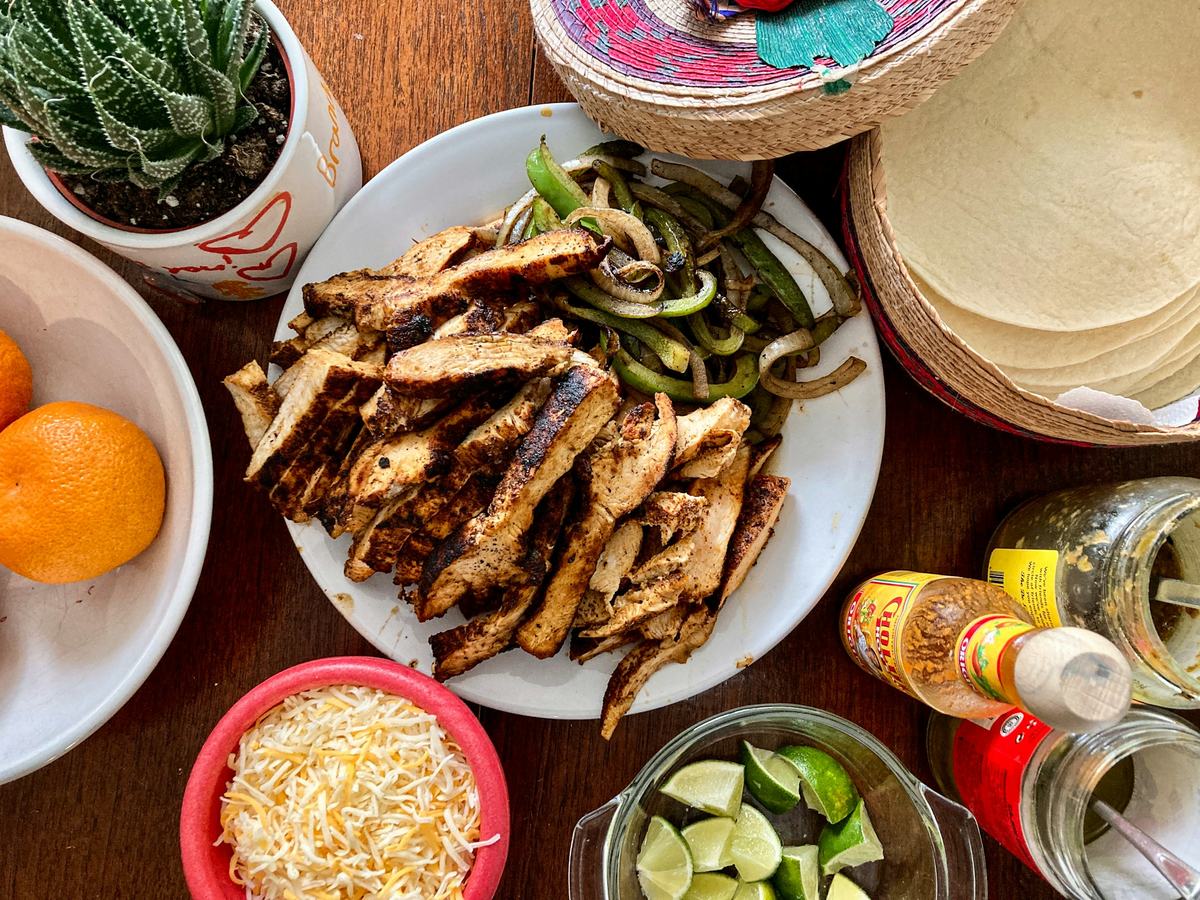
The pan does all of it and it has to be hotter than feels sensible — open a window before you start. The chicken goes in whole, in one layer, and is left alone until it has a proper crust; while it rests on the board, the peppers and onions go into the same pan and take the colour off the bottom of it. Slice the chicken across the grain at the last minute and tip the juices from the board back over. Everything else happens at the table.
What you buy
- 700 g chicken breasts, about 4, left whole
- 3 bell peppers, green or a mix, sliced into strips
- 2 onions, sliced into half-moons
- 12 small flour tortillas
- 2 limes, one juiced and one cut into wedges
- 100 g cheddar or Monterey Jack, coarsely grated
- 3 tbsp neutral oil
- 2 tsp smoked paprika
- 2 tsp ground cumin
- 1 tsp dried oregano
- 0.5 tsp cayenne pepper
- 1 tsp salt
Do not cut the chicken into strips before it is cooked. It is the standard instruction and it is the reason most home fajitas come out dry: strips have several times the surface area of a whole breast, they lose their moisture to a hot pan in about ninety seconds, and there is no way to brown them without overcooking them through. Whole, then rested, then sliced.
What you do
- Mix the paprika, cumin, oregano, cayenne, salt and a good grind of black pepper with 1 tbsp of the oil into a loose paste. Rub it over the whole chicken breasts and leave them on the counter for fifteen minutes, or in the fridge for up to a day.
- Put a heavy frying pan or a cast-iron pan over the highest heat and leave it there for three or four minutes, until a drop of water skitters across it. Open a window.
- Add 1 tbsp of oil and lay the chicken in whole, in one layer, with space between the pieces. Leave it completely alone for five minutes, until the underside is deeply browned, then turn it once and give it four or five minutes more, until it is cooked through. Move it to a board and leave it there.
- Turn the heat down a little, add the last of the oil and tip in the peppers and onions. Spread them into one layer and leave them still for two minutes at a time before stirring, so they char instead of steaming. Eight to ten minutes in total: blistered in patches, still with some bite.
- Squeeze the juice of one lime into the pan and scrape the brown bits off the bottom as it hisses. Taste, and add salt if it needs it.
- Warm the tortillas one at a time in a second dry pan, about twenty seconds a side, and stack them inside a folded tea towel as they come off so they steam each other soft.
- Slice the chicken across the grain into finger-wide strips and pour whatever has collected on the board back over it. Take the pan, the chicken, the tortillas, the cheese and the lime wedges to the table and let everyone build their own.
Three things that decide it
- The chicken is cooked whole and cut afterwards. Slicing first is what almost every recipe says, and it is the single reason fajitas have a reputation for being dry: a strip of breast has several times the surface area of the whole piece, so it gives up its moisture long before it has taken any colour. Cooked whole, the outside browns while the middle is still doing nothing, and the five minutes it spends resting on the board is when the juices settle instead of running out onto the plate.
- The pan has to be too hot and too empty. Peppers and onions hold a lot of water, and water leaving them is what stops them charring: crowd the pan and the temperature drops, the water cannot boil off fast enough, and they simmer in it. Two things follow. Cook in two batches rather than one if the pan is not wide, and leave the vegetables still for a couple of minutes at a time — constant stirring keeps any one piece from ever sitting long enough on the metal to colour.
- The lime goes in at the end, not hours before. A dry rub of paprika, cumin and oregano wants time and fat to get into the meat, and it can sit on the chicken overnight quite happily. Acid does something different: it works on the surface, firming and whitening it, and a breast left in lime juice for a few hours cooks to a slightly chalky outside. Squeezed into the pan at the end it deglazes the brown bits and tastes of lime rather than of marinade.
If you have not got it
- Chicken breasts
- Boneless, skinless thighs, same weight. More forgiving of a very hot pan and harder to dry out, but they need three or four minutes longer and the thicker end should be opened out flat so it cooks at the same rate as the rest.
- Flour tortillas
- Corn tortillas, same number. They tear more easily and want a harder, drier warming — thirty seconds a side until they puff slightly — but they hold up better under anything wet. Cold, either kind cracks.
- Smoked paprika
- Sweet paprika plus a pinch of chipotle, or plain paprika on its own. Sweet paprika alone makes a gentler, less barbecue-flavoured version; the smoke is the loudest note in the rub, so this is a bigger change than the quantity suggests.
- Grated cheese
- Soured cream, plain yogurt loosened with lime, or nothing at all. The cheese is there to melt against hot chicken; if it is going on cold vegetables it does very little, and a spoonful of something acidic does more.
Ahead, and afterwards
The rub is the part worth doing early. Chicken can sit rubbed and covered in the fridge for up to a day and comes out better for it, and the peppers and onions can be sliced the night before and kept in a box. Cooked, the whole thing keeps three days in the fridge, but reheating it is where it goes wrong: a microwave finishes the cooking the pan carefully stopped, and the chicken turns to string. Warm it in a dry pan over a medium heat for two minutes at most, or better, eat it cold in a wrap or a sandwich the next day, which is what it is genuinely good at. For the freezer, freeze the cooked chicken strips only — two months, defrosted overnight — and cook fresh peppers when you use them. Peppers that have been frozen thaw limp and watery and undo the only thing this recipe is about. Tortillas freeze well in their packet.
If it went wrong
- The peppers went soft and grey instead of charring
- The pan was not hot enough, or it was too full, or both. Peppers release a lot of water and it has to boil off faster than it comes out. Cook them in two batches, spread them into one layer, and leave them alone for two minutes at a time — stirring constantly is the most common cause. Salt them at the end rather than the start, because salt pulls the water out early.
- The chicken was dry
- Almost always because it was cut into strips before cooking. Cook it whole, take it out as soon as it is done through, and let it rest five minutes before slicing. The second cause is a pan that was hot on top and cold underneath: a thin pan loses its heat the moment cold meat lands on it, and the chicken then poaches slowly instead of searing.
- It tasted dusty, like raw spice
- Dry ground spices need fat and heat to stop tasting of powder. Mixing the rub with a tablespoon of oil before it goes on the chicken does most of it, and the fifteen minutes it then sits does the rest. If it is already on the plate, a squeeze of lime and a little salt covers more of it than you would expect.
Three ways to change it
Skirt or flank steak, 600 g, rubbed the same way. It wants an even hotter pan and much less time — three minutes a side for something finger-thick, then a full five minutes' rest. Slice it across the grain, which on skirt means across the very obvious lines running down the piece, and cut thinner than you would the chicken.
Replace the chicken with 500 g of portobello mushrooms torn into thick pieces and a drained tin of black beans. Brown the mushrooms hard and dry before any oil goes near them, or they steam in their own water; the beans go in at the end just to warm through.
Everything on one tray at 220°C fan for twenty minutes, chicken on top of the vegetables. You lose most of the char, which is the point of the dish, and you gain the ability to cook for eight without standing over a pan. A fair trade on a weeknight; not the version to cook the first time.
Questions people ask
Can I rub the chicken the night before?
Yes, and it is better for it — up to twenty-four hours, covered, in the fridge. Keep the lime out of it. The dry spices and salt want that time to work into the meat, but citrus juice works on the surface instead, and a breast that has sat in it for hours cooks to a firm, slightly chalky outside.
What is the difference between fajitas and tacos?
Fajitas are a Tex-Mex dish with a specific shape: strips of meat cooked hot with peppers and onions, brought to the table with warm flour tortillas so everyone builds their own. Tacos are a much wider family, usually on corn tortillas, and are normally assembled in the kitchen. The overlap is real but the assembly is the honest difference.
Do I need a cast-iron pan?
No, but you need a heavy one. What matters is how much heat the pan is holding when cold chicken hits it: a thin pan drops in temperature immediately and the meat poaches. Cast iron, carbon steel or a heavy stainless pan all work. A non-stick pan is the wrong tool here — most are not meant to be taken to the heat this needs.
Cooking it for a different number
Written for 4. For two, halve the 700 g chicken breasts and leave the seasonings as they are — they scale badly by arithmetic and well by taste. For six or more, add half again rather than double, and use two trays or two pans instead of crowding one.
Or change the number once and let the shopping list follow. That is the one bit of this a person should never do by hand.
Read next
Sheet-Pan Chicken Thighs with Potatoes and Peppers
Skin that crackles, potatoes that catch at the edges, and one tray to wash. 35 min
Turkey Chili with Black Beans
Smoky, thick enough to stand a spoon in, and better on the second day. 15 min