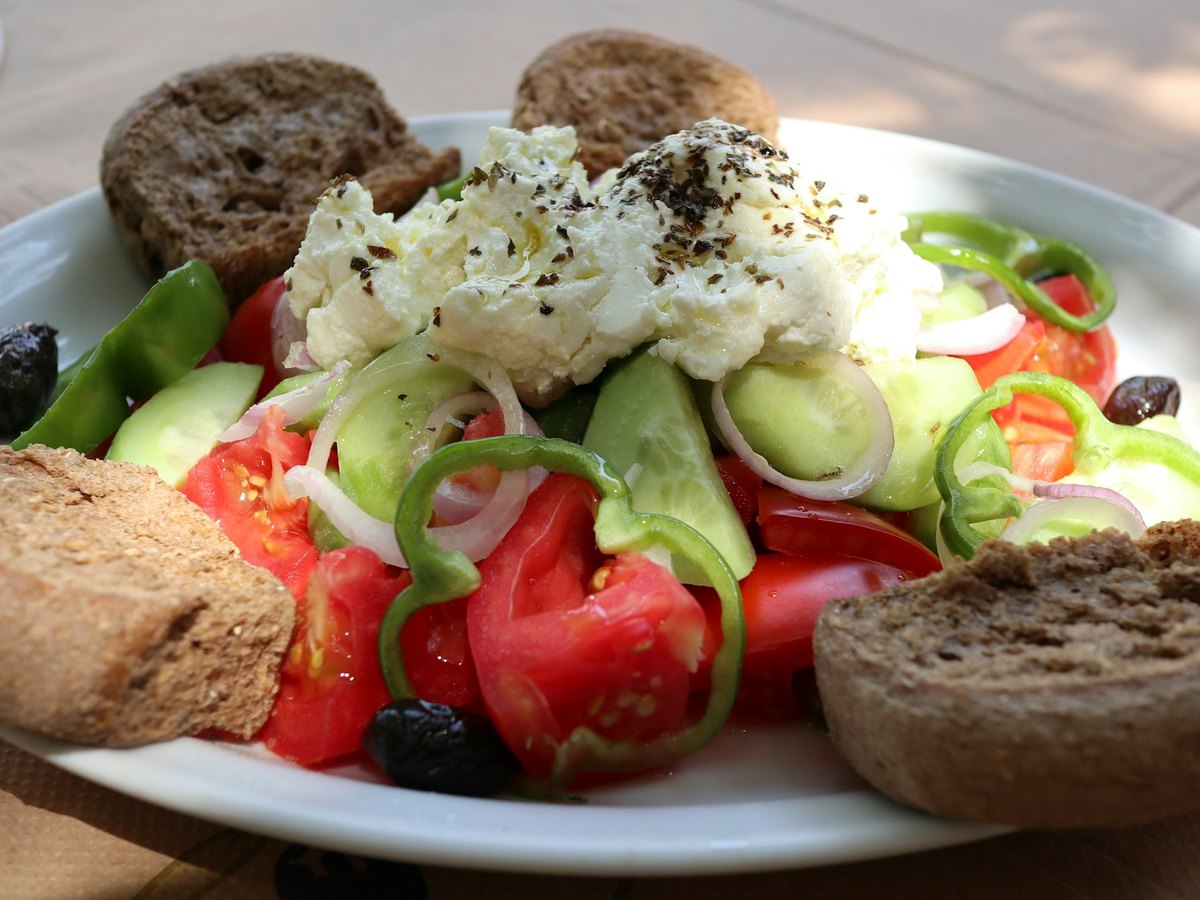
Greek Salad, and Bread for the Juice
No lettuce and nothing switched on. Tomatoes, a slab of feta, and bread for what they leave in the plate.
- 15 minprep
- 4servings
the tomatoes are good and you want lunch in fifteen minutes with nothing switched on
the tomatoes are pale and hard — this is mostly tomato, and it cannot hide a bad one
Nothing here is cooked, which means there is nowhere to hide and only one real decision: salt the tomatoes first and give them ten minutes. What comes out of them is the dressing — the oil is only there to carry it. Everything else is cutting. The feta goes on top in one piece rather than crumbled, and the bread is not a side dish: half of this salad ends up as liquid at the bottom of the plate, and bread is the only way to get it out.
What you buy
- 600 g ripe tomatoes, cut into thick wedges
- 1 cucumber, peeled in stripes and cut into thick half-moons
- 1 green pepper, seeded and sliced into rings
- 1 small red onion, sliced thin
- 200 g feta, in one slab
- 100 g black olives, with the stones in
- 4 barley rusks, or half a loaf of yesterday's bread
- 6 tbsp olive oil
- 1 tbsp red wine vinegar
- 1 tsp dried oregano
- 1 tsp salt
The bread is not a garnish. Between the tomato water, the brine off the olives and six tablespoons of oil there is most of a cupful at the bottom of that plate, and it is the best thing on it.
What you do
- Cut the tomatoes into thick wedges, put them in a wide shallow bowl, scatter over the salt and leave them ten minutes. They will give up a pool of liquid — that is the dressing, so do not pour it away.
- Add the cucumber, the pepper rings, the onion and the olives. Pour over the oil and the vinegar and turn it once with your hands rather than a spoon, which breaks less.
- Sit the feta on top in one piece. Crumble the oregano between your fingers over the cheese, add a last thread of oil, and grind pepper over the lot.
- Put the rusks or the torn bread around the plate and take it to the table straight away. Break the feta with a fork as you eat, and finish the plate with the bread.
Three things that decide it
- Salt the tomatoes ten minutes before anything else touches them. The liquid they let go is the dressing; the oil only carries it. Dress them cold and unsalted and the water arrives afterwards, at the bottom, thinning everything.
- No lettuce. Horiatiki is a tomato salad, and leaves do two bad things in it — they wilt in the salt and they soak up the juice the bread is meant to get.
- Cut everything thicker than feels right. Thin cucumber and thin onion go limp within minutes of meeting salt; in wedges and half-moons they still have a bite when the plate reaches the table.
If you have not got it
- Feta
- Any firm white cheese kept in brine. Avoid the pre-crumbled tubs — they are drier, they dissolve into the juice, and they salt the whole plate instead of one mouthful.
- Barley rusks
- Yesterday's bread, torn rather than sliced. Stale is genuinely better here: it takes on the liquid instead of collapsing into paste.
- Red wine vinegar
- Half a lemon. Sharper and less rounded, so start with less and taste before you add the rest.
- Green pepper
- Leave it out. It is the one ingredient here people actively dislike, and nothing about the salad falls over without it.
Ahead, and afterwards
Cut the cucumber, pepper and onion up to a day ahead and keep them in a box in the fridge — they are the slow part. The tomatoes are not a make-ahead job: cut them when you want to eat, because once salted they are on a clock. Dressed, the salad is at its best between ten minutes and an hour old and it holds fine on the counter for that hour. It does not survive a night in the fridge; the vegetables go slack and the feta goes chalky. Nothing here freezes, and there is no version of this that reheats.
If it went wrong
- It ended up watery and pale
- The tomatoes went in unsalted and got dressed straight away, so the water came out after the oil rather than before it and thinned everything down. Salt them first, wait, then dress what is already sitting in its own juice.
- The feta was squeaky and tasted of nothing
- It went on fridge-cold. Take it out of its brine and leave it on the board twenty minutes with the rest of the prep — cold feta is rubbery and mute, and it will not pick up the oregano and oil.
- It tasted flat, and more salt did not fix it
- Cold tomatoes. Refrigeration shuts down most of what a tomato smells of, and salt cannot stand in for that. Everything here wants to be at room temperature, which is also the fastest thing on this list to get right.
Three ways to change it
Wet the rusks briefly and put them UNDER the salad instead of around it. They drink the tomato water and turn into the base of the dish, which is how Crete eats it.
Two tablespoons of salt-packed capers, rinsed well and scattered in with the olives. Cut the salt on the tomatoes to half a teaspoon if you do.
Two fillets mashed into the olive oil before it goes over. It does not read as fish, only as a deeper savoury note under the tomato.
Questions people ask
Does a real Greek salad have lettuce in it?
No. Horiatiki means village salad and it is built on tomato, cucumber, pepper, onion, olives and feta — no leaves. The lettuce-based one is a different dish with its own name, maroulosalata, and it is dressed differently.
Should I crumble the feta or leave it whole?
Leave it whole, in one slab on top. Crumbled feta breaks down into the dressing and makes every mouthful equally salty; a slab you break with your fork gives you plain tomato in one bite and a lump of cheese in the next, which is the point of it.
Can I make it the night before for lunch tomorrow?
Only partly. Cut the cucumber, pepper and onion and box them, and they will be fine. Do not cut or salt the tomatoes and do not dress anything — a Greek salad that has sat dressed overnight is a bowl of vegetables in pink water.
Cooking it for a different number
Written for 4. For two, halve the 600 g ripe tomatoes and leave the seasonings as they are — they scale badly by arithmetic and well by taste. For six or more, add half again rather than double, and use two trays or two pans instead of crowding one.
Or change the number once and let the shopping list follow. That is the one bit of this a person should never do by hand.
Read next
Chicken and Roasted Pepper Sandwiches
Cold roast chicken, paprika yogurt, and a roll toasted harder than feels sensible. 25 min
Caesar Salad, and the Egg Gets One Minute in the Water
The dressing is not mayonnaise loosened with a squeeze of lemon. It is built from a barely-cooked egg yolk, whisked with garlic, anchovy and oil until it turns pale and thick — the same emulsion a vinaigrette is, just richer. Skip the coddling and the yolk is either raw or scrambled; there is only one minute where it is neither. 18 min