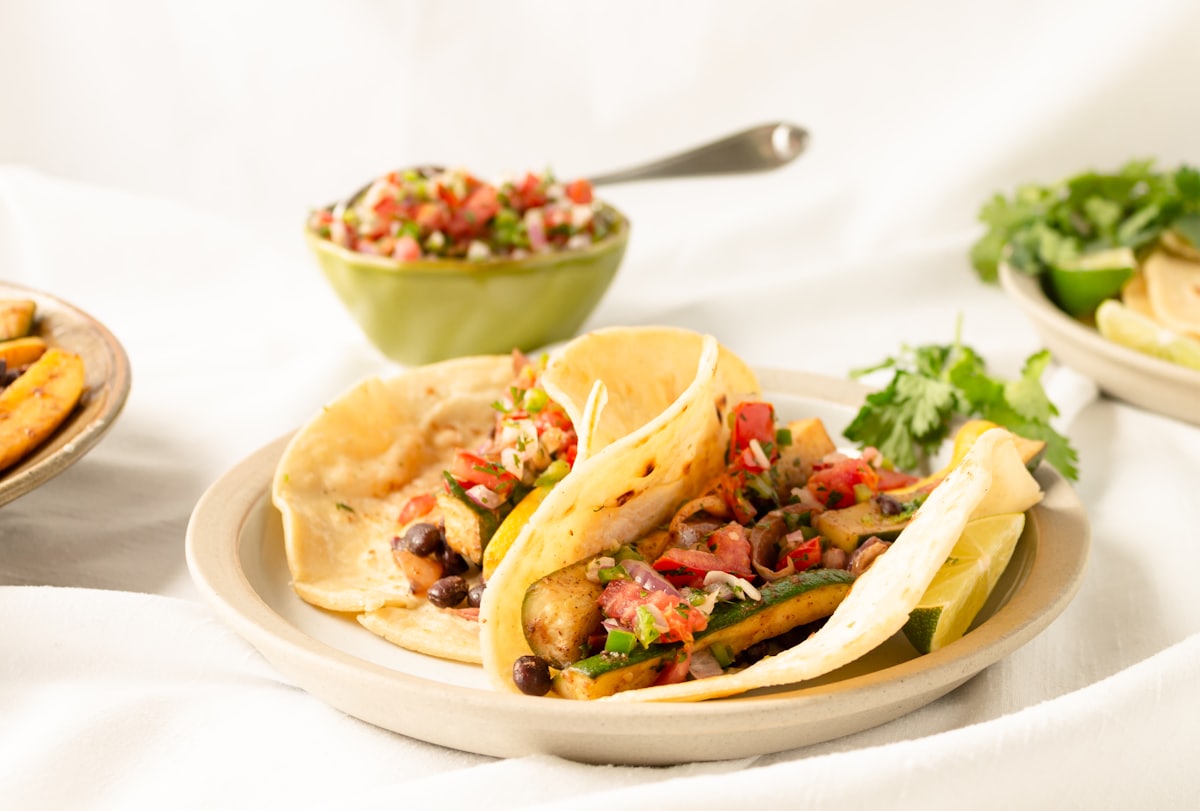
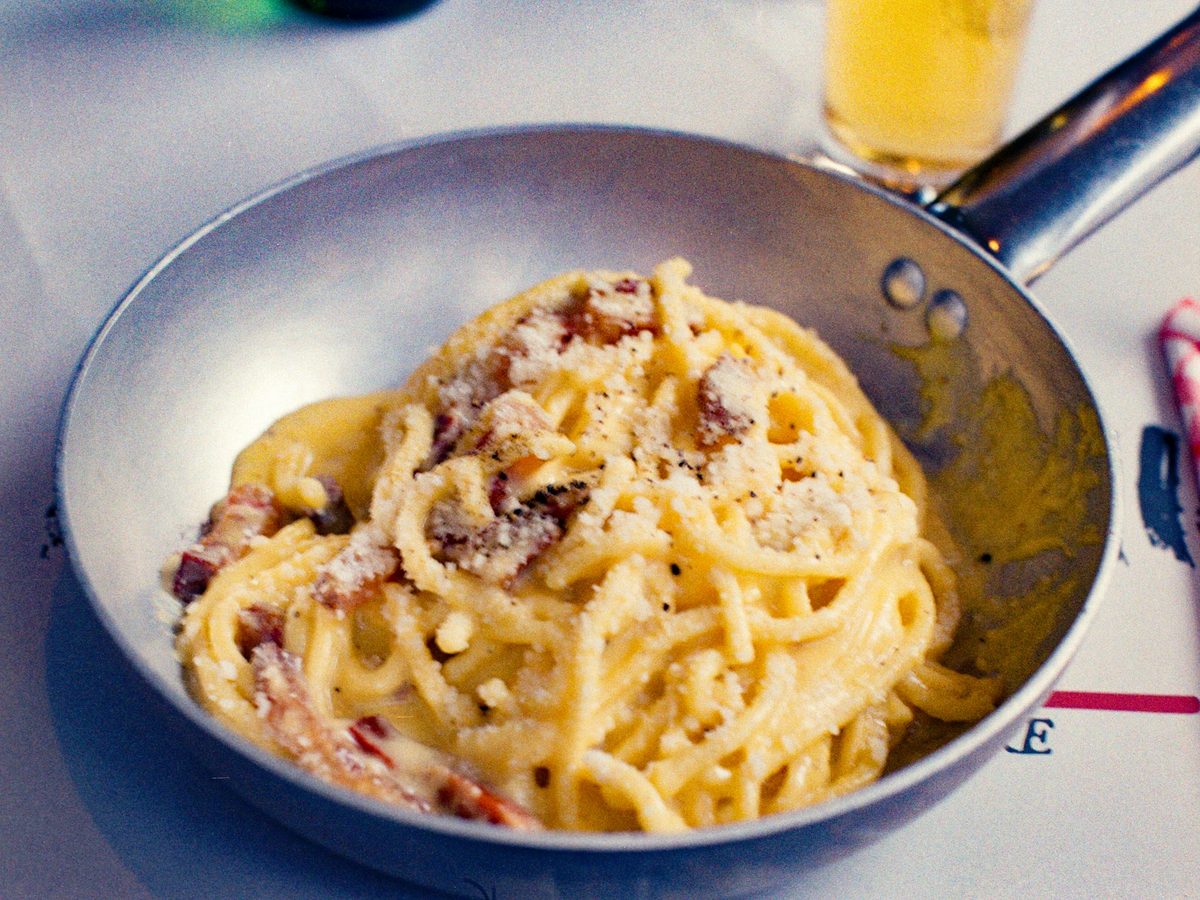
Spaghetti Carbonara, and No Cream Anywhere
Four things and twenty-five minutes. The sauce is egg yolk, pecorino and the fat rendered out of the guanciale, and the only difficult part is keeping the pan off the heat.
- 10 minprep
- 4servings
you want dinner out of four things in twenty-five minutes and everyone is already at the table
it needs to sit and wait — this is finished about thirty seconds before it is eaten, and it does not hold
Everything happens in the last two minutes, so do the rest first: cut the guanciale, grate the cheese, beat the eggs, and only then put the pasta in. The guanciale goes into a cold pan and renders itself down while the water comes up to the boil. What decides the dish is the moment the drained spaghetti meets the eggs, and at that moment the pan has to be warm and off the heat. Twenty seconds of hard tossing after that and it is dinner.
What you buy
- 400 g spaghetti
- 150 g guanciale, in one piece, rind cut off
- 70 g Pecorino Romano, finely grated
- 4 egg yolks
- 1 whole egg
- 2 tsp black peppercorns, coarsely ground
- 1 tbsp salt, for the water
Salt the water with about half of what you normally would. Pecorino Romano is a salted sheep's cheese and guanciale is cured pork; between them they season the whole dish, and normally salted water on top of both is the most common reason a carbonara comes out too salty to finish.
What you do
- Cut the guanciale into strips about a centimetre thick and the length of your thumb. Put them into a cold, dry frying pan wide enough to hold the pasta later, and set it over a medium-low heat.
- Let the guanciale render for eight to ten minutes, turning it now and then, until the fat has run out clear and the pieces are gold and crisp at the edges. Lift the pieces out with a slotted spoon and leave every drop of the fat in the pan.
- Put a large pan of water on to boil and salt it with about half of what you normally would. Add the spaghetti and cook it one minute short of the time on the packet.
- While it cooks, beat the yolks, the whole egg and about three quarters of the pecorino together in a bowl with most of the pepper. It should be a thick paste. Loosen it with a tablespoon of the warm guanciale fat and beat it smooth.
- Tip the rest of the pepper into the pan of fat, put it back over a low heat for thirty seconds until it smells of pepper, then take it off the heat for good.
- Lift the spaghetti straight into the pan with tongs, keeping a mugful of the cooking water. Toss it through the fat and then leave it a full minute: the pan needs to be warm, not hot, before anything else happens.
- Pour in the egg mixture and toss hard and continuously, adding the pasta water a splash at a time, until the sauce turns glossy and coats every strand instead of sitting under it. If it stays thin, put the pan back over the lowest heat for five seconds at a time, moving it constantly.
- Stir the guanciale back in and serve it immediately, with the last of the pecorino and more pepper on top.
Three things that decide it
- No cream, and that is not a purist's point. Cream is insurance: it stabilises the sauce so it cannot split, and it flattens it at the same time. What is meant to be there instead is an emulsion of egg yolk, hard salty cheese and the fat rendered out of the pork, loosened with the starchy water the pasta cooked in. Made that way it is glossier and lighter than the cream version, and it tastes of pork and pepper rather than of dairy.
- The pan comes off the heat before the eggs go anywhere near it. An egg yolk starts to set somewhere around 65°C, and a pan that has just had boiling pasta in it is well past that. Off the heat, with a minute to lose its edge, the residual warmth is enough to thicken the eggs and not enough to scramble them. If the eggs never sit over a flame, the dish is very hard to ruin.
- The fat is an ingredient, not a cooking medium. Guanciale is cured pork jowl, and it gives up more fat, and more perfumed fat, than pancetta or bacon does; that fat carries the pepper and a good half of what the finished plate tastes of. It is also why the guanciale starts in a cold pan — put it into a hot one and the outside seizes before the inside has rendered anything at all.
If you have not got it
- Guanciale
- Pancetta, same weight, and it is the closest thing there is: leaner, less perfumed, entirely good. Unsmoked streaky bacon works too. Smoked bacon is a bigger change than it looks in a dish with four ingredients — the smoke becomes the loudest thing on the plate.
- Pecorino Romano
- Parmesan, same weight, but taste before you add any salt: it is milder and much less salty, so the dish comes out gentler and needs the seasoning checked. Half of each is the usual compromise and it is a good one.
- Spaghetti
- Bucatini, tonnarelli or rigatoni, same weight. Anything with a rough surface holds the sauce; the very thin shapes, angel hair and vermicelli, cool too fast and clump before you have finished tossing.
- Four yolks and one whole egg
- Six yolks and no white at all for a richer, tighter sauce, or two whole eggs and two yolks for a looser one that is more forgiving of a warm pan. The white is what sets fastest, so the more of it there is, the less margin you have.
Ahead, and afterwards
This is not a make-ahead dish and no amount of technique turns it into one — it is finished about thirty seconds before it is eaten. What can be done in advance is all of the preparation, which is most of the work: the guanciale can be cut and rendered up to three days early and kept in the fridge under its own fat, and the cheese can be grated and the pepper ground the day before. Leftovers are honest about what they are. The sauce stiffens in the fridge and never comes back quite the way it went in, but a portion warmed slowly in a pan with a splash of water, moved constantly, is a decent lunch the next day. Do not use a microwave, which heats unevenly and finishes the scrambling the pan avoided, and do not freeze it: freezing splits the emulsion outright and the pasta thaws soft.
If it went wrong
- It scrambled into lumps
- The pan was too hot when the eggs went in. Nothing rescues it once the egg has properly set, so the fix is for next time: take the pan off the heat before the pasta goes in, then wait a full minute before the eggs. Caught in the first second, a splash of pasta water and very fast tossing sometimes pulls it back.
- The sauce stayed thin and slid to the bottom of the bowl
- Either too much pasta water went in at once, or the pan was already too cool to thicken anything. Add the water a splash at a time rather than a ladle, and if it is still loose, put the pan back over the lowest heat for five seconds at a time, moving it constantly, until it turns glossy.
- It was too salty to finish
- The water was salted as usual on top of two ingredients that are already salted. Pecorino and guanciale between them do the seasoning; halve the salt in the water and taste before adding any at the end.
Three ways to change it
Leave the eggs out completely. Guanciale, pecorino, pepper and pasta water, tossed the same way. It is the same dish one ingredient earlier, it is what to cook when there are no eggs in the house, and the sauce is far harder to break.
Slice two courgettes into thin rounds and fry them in the rendered fat until they are properly browned before the pepper goes in, then leave them in the pan. A standard Roman summer version, and the browning is not optional — pale courgette only makes the sauce watery.
Tubes and ridges hold several times more sauce than a strand does, so the same quantity eats much richer. Worth knowing rather than a mistake: if a carbonara has ever felt like too much, this is the direction to avoid, and if it has felt like too little, this is the fix.
Questions people ask
Why is there no cream in it?
Because the sauce does not need it and is better without it. Egg yolk, grated pecorino and rendered fat emulsify with starchy pasta water into something glossier and lighter than cream makes. Cream is in most versions to stop the eggs splitting, and taking the pan off the heat does that job instead, for nothing.
Can I use bacon?
Yes, and unsmoked streaky bacon is close enough that most people would not name the difference. Smoked bacon is a real change: with only four ingredients on the plate, smoke ends up being the flavour you notice first. If smoked is all there is, use a little less of it.
What do I do with the four egg whites?
Keep them. Whites freeze better than almost anything else in the kitchen — one to each compartment of an ice-cube tray, then bagged once solid, and they defrost perfectly usable. In a covered jar in the fridge they hold three or four days. Meringues, an omelette and the egg wash on anything baked all take them.
Cooking it for a different number
Written for 4. For two, halve the 400 g spaghetti and leave the seasonings as they are — they scale badly by arithmetic and well by taste. For six or more, add half again rather than double, and use two trays or two pans instead of crowding one.
Or change the number once and let the shopping list follow. That is the one bit of this a person should never do by hand.
Read next
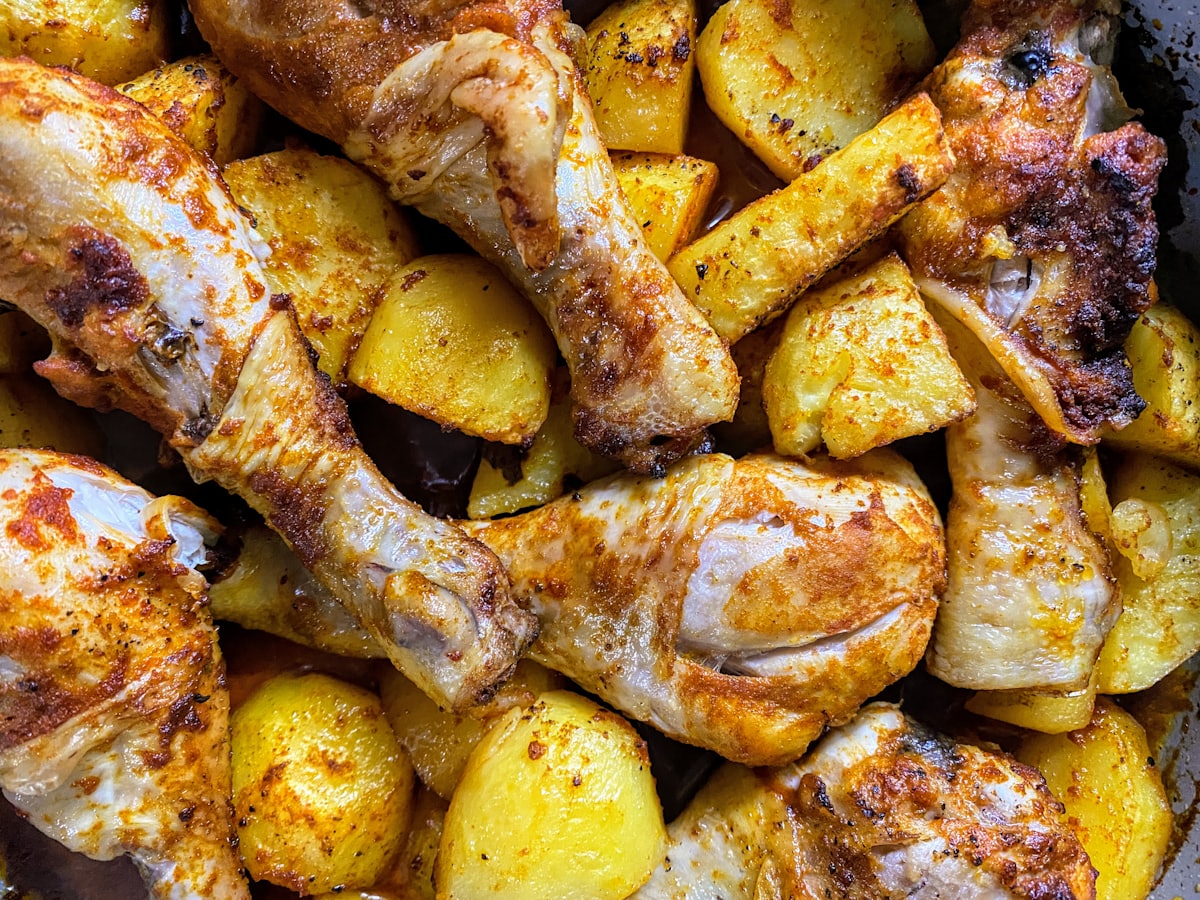
Sheet-Pan Chicken Thighs with Potatoes and Peppers
Skin that crackles, potatoes that catch at the edges, and one tray to wash. 35 min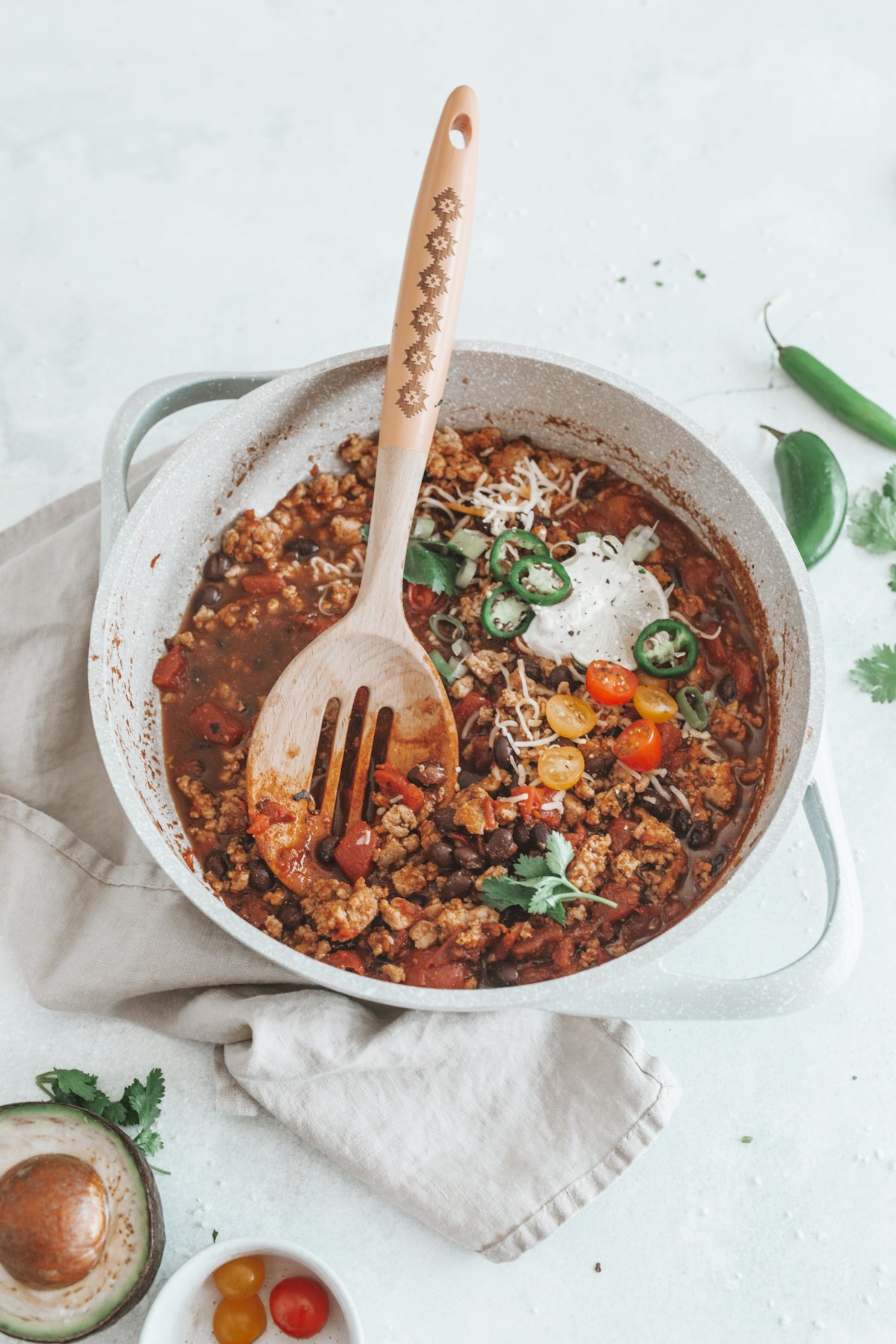
Turkey Chili with Black Beans
Smoky, thick enough to stand a spoon in, and better on the second day. 15 min